
EFSA and ECDC: AMR in foodborne bacteria remains a European public health concern
Antimicrobial resistance (AMR) in common foodborne bacteria — including Salmonella and Campylobacter — continues to pose a significant public health risk across Europe, according to a new joint report published by the European Food Safety Authority (EFSA) and the European Centre for Disease Prevention and Control (ECDC).
Based on AMR surveillance data collected from 2023–2024 and submitted by 27 EU Member States, the United Kingdom (Northern Ireland) and five non-EU countries, the report draws on integrated One Health monitoring of bacteria from humans, food-producing animals and meat. The findings underline the continued challenge of managing resistance across the human–animal–food interface.
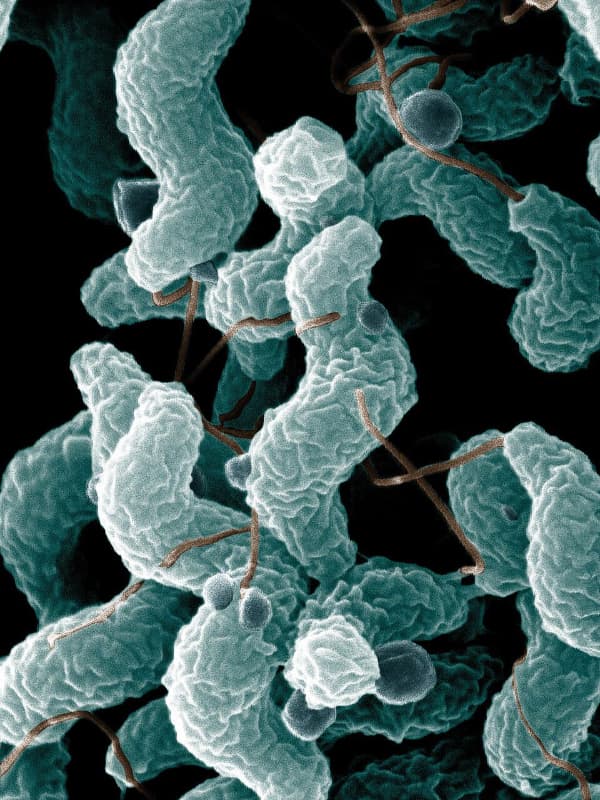
Campylobacter
Ciprofloxacin resistance and the threat to treatment options
A high proportion of both Campylobacter and Salmonella isolated from humans and food-producing animals show resistance to ciprofloxacin, an antimicrobial widely used to treat severe infections in humans. Resistance in human Salmonella infections has increased in recent years, compounding concern about narrowing treatment options.
For Campylobacter, the situation is particularly acute: resistance is now so widespread in Europe that ciprofloxacin is no longer recommended as a treatment for human infections. Restrictions on its use in animals have been introduced to protect its remaining utility in human medicine.
Resistance to ampicillin, tetracyclines and sulfonamides was also recorded at high levels in both Salmonella and Campylobacter from humans and targeted food-producing animal species.
Carbapenemase-producing E. coli: a growing concern
The report flags an increasing number of detections of carbapenemase-producing E. coli in food-producing animals and meat across several countries. Carbapenems are last-resort antimicrobials in human medicine and are not authorised for use in food-producing animals. The precise sources of these detections remain under investigation, and the upward trend warrants close surveillance.
Encouraging signals amid persistent resistance
Despite the overall picture, the report identifies several areas of measurable progress. In Salmonella, resistance to ampicillin declined significantly over the past ten years in 19 countries, and resistance to tetracyclines fell in 14 countries. Positive trends were also observed in food-producing animals at EU level, with decreasing tetracycline resistance in broilers and declining ampicillin and tetracycline resistance in turkeys.
For Campylobacter, resistance to erythromycin — a first-line treatment for human infections — has declined in several countries over the past decade, both in humans and in some food-producing animal populations.
Combined resistance to multiple critically important antimicrobials remains generally low across Salmonella, Campylobacter and E. coli, though progress in E. coli resistance reduction in poultry has plateaued in some areas.
One Health approach remains essential
The findings reinforce the value of coordinated surveillance and intervention across human health, animal health and food production sectors. Continued responsible antimicrobial use, alongside robust infection prevention and food safety practices, is essential to slow the spread of resistant bacteria and protect public health across Europe.
- For more information, visit: https://www.efsa.europa.eu and https://www.ecdc.europa.eu