Wheat bran hydrogels: KTH scientists create fully plant-based fibre-protein food gels from milling by-products
Scientists at KTH Royal Institute of Technology in Stockholm have produced tunable hydrogels made entirely from wheat bran arabinoxylan and wheat gluten – marking the first systematic incorporation of a plant-derived protein into bran-based gel systems. The work points to new applications for cereal milling side streams as functional food hydrocolloids combining dietary fibre and protein.
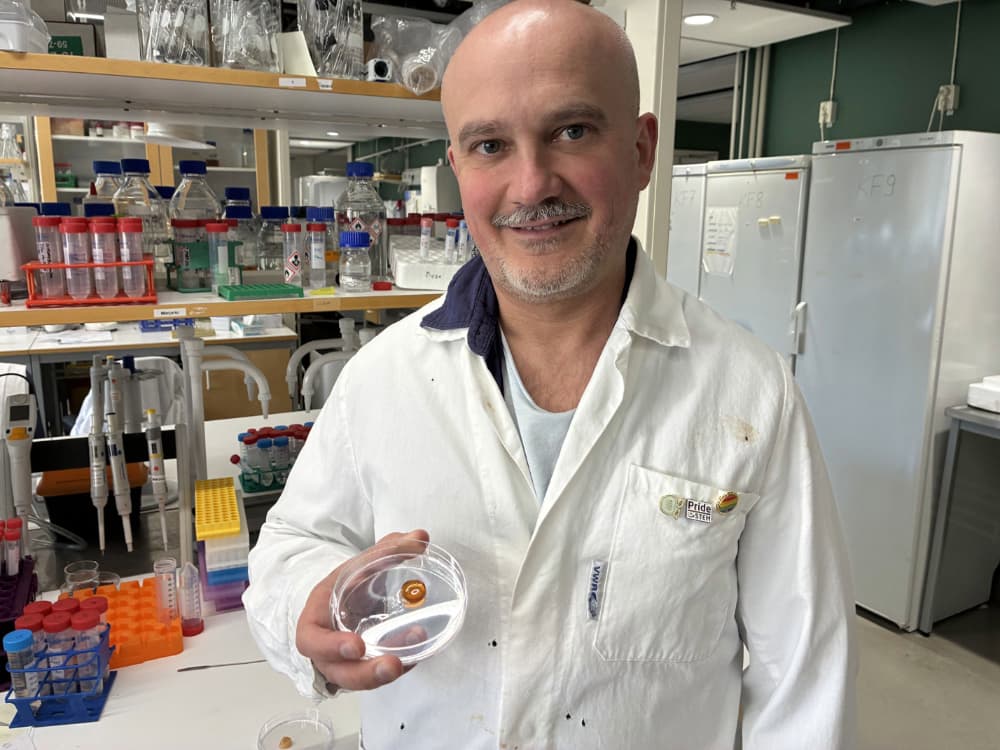
“This could add new value to agricultural side streams that are already produced in huge amounts but not used in human food,” says Francisco Vilaplana, pictured in his lab. © David Callahan
Background: turning a low-value by-product into a food ingredient
Wheat bran is the primary side stream from wheat flour production, with approximately 160 million tonnes generated annually worldwide. Despite its high content of dietary fibre – principally arabinoxylan (AX), which accounts for 20-40% of the total carbohydrate fraction – bran is largely directed to animal feed owing to its poor organoleptic properties. Research from the Division of Glycoscience at KTH, published in Food Hydrocolloids, now demonstrates that bran-derived AX can be enzymatically crosslinked with wheat gluten to produce hybrid polysaccharide-protein hydrogels with tuneable rheological properties.
“That’s in contrast to the rough and fibrous mouth-feel of wheat bran, which normally prevents us from enjoying it in healthy food products,” says Francisco Vilaplana, professor in glycoscience at KTH and director of the PLENTY research centre.
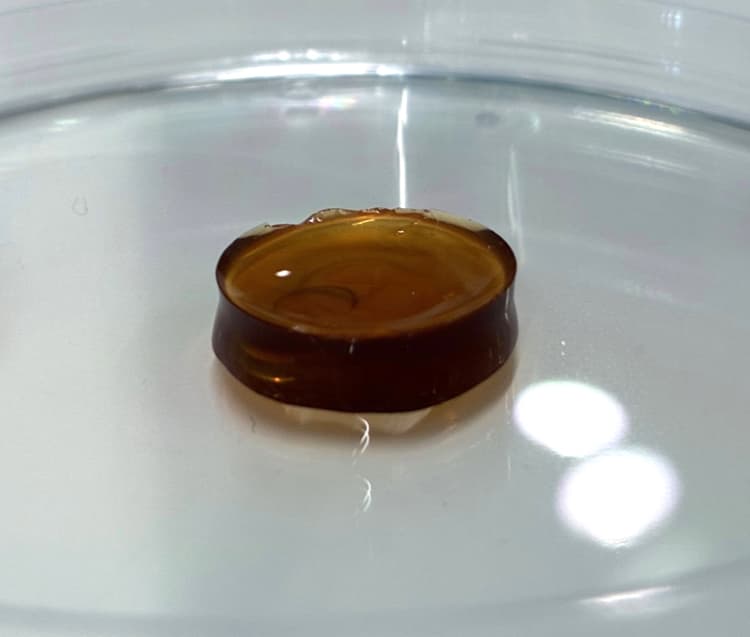
The study marks the first time wheat gluten protein – rather than animal-based protein – has been successfully incorporated into bran-based hydrogels (pictured). © David Callahan
Gel preparation via enzymatic crosslinking and regeneration
AX was extracted from destarched wheat bran using subcritical water extraction at 160°C and 10 MPa – a process that preserves both the polymeric integrity of the polysaccharide and its covalently bound ferulic acid (FA) moieties. These FA substituents serve as the anchor points for oxidative crosslinking by the enzyme laccase (Trametes versicolor), which proceeds via a free-radical mechanism to form covalent diferulyl bridges between adjacent AX chains.
Wheat gluten was fractionated into its constituent glutenin and gliadin components using aqueous ethanol treatment. Hydrogels were then prepared at a 10% w/v total solid concentration, with gluten content varying from 0% to 30% by mass. A second preparation route – involving freeze-drying followed by rehydration, termed regeneration – was also investigated.
The authors note that “hydrogels with different contents of arabinoxylan and gluten were prepared, demonstrating the integration of the protein fractions within the polysaccharide gel network.” Regeneration produced a 3- to 10-fold increase in storage and loss moduli depending on sample composition, yielding self-standing gels suitable for further handling and characterisation.
Role of gluten in the gel network
Rheological analysis showed that increasing gluten content from 0% to 30% produced a gradual softening of the gels, with storage modulus declining progressively regardless of whether whole gluten, glutenin or gliadin fractions were used. This behaviour contrasts with what might be expected if gluten were participating in covalent crosslinking.
The authors concluded that “the majority of the crosslinks in the AX-gluten gel network were most likely formed between adjacent AX chains without involving the gluten fractions.” Neither gluten nor its isolated fractions formed self-standing gels when incubated with laccase independently – all remained liquid suspensions even after regeneration – consistent with low laccase activity on tyrosine residues and restricted accessibility due to the compact β-sheet secondary structure of the protein fractions.
The softening effect was attributed primarily to dilution of the AX concentration, though wide-angle X-ray scattering (WAXS) analysis confirmed a structural contribution: enzymatic crosslinking of AX in the presence of gluten reduced AX crystallinity compared with pure AX gels, indicating that gluten interferes with intramolecular backbone organisation through steric effects.
Microstructural evidence for phase separation
Cryo-scanning electron microscopy after high-pressure freezing revealed a loose fibrillar network in non-regenerated AX gels, which densified substantially upon regeneration. In regenerated AX-gluten gels (G20r), discrete globular inclusions were visible that were absent in their non-regenerated counterparts, suggesting protein-polysaccharide phase separation induced by the freeze-drying and rehydration process. The authors propose that “the polysaccharide and protein components have different hydrophilicity and hydration kinetics, which could increase the network heterogeneity upon regeneration.”
Implications for food manufacturing
Vilaplana highlights the commercial relevance of the approach: “This could add new value to agricultural side streams that are already produced in huge amounts but not used in human food.” Gels of this type could serve as thickening, stabilising or texturising agents in plant-based meat and dairy alternatives, high-fibre snacks, sauces, and sports or medical nutrition products. Early tests suggest the method may be transferable to other plant proteins, including pea and soy.
The authors conclude that “the arabinoxylan-gluten gels could have promising applications as functional plant-based food hydrocolloids (i.e. thickening and texturizing agents) with improved sustainability and nutritional profiles, as they arise from widely abundant agricultural by-products from wheat flour processing, and they combine the benefits of dietary fibre and protein components.”
The research was funded by the Lantmännen Research Foundation and conducted under the PLENTY centre at KTH, a Formas-funded initiative dedicated to resource optimisation and circular supply chains in the food system.
Journal reference
Wahlström, N., Ladd Parada, M., Yilmaz-Turan, S., et al. (2026). Arabinoxylan-gluten hydrogels with tunable rheological properties via enzymatic oxidation and regeneration. Food Hydrocolloids, 172, 111930. https://doi.org/10.1016/j.foodhyd.2025.111930