
Seaweed protein extraction methods shape functional properties for food applications, study finds
Researchers at the University of Minho have demonstrated that different purification techniques applied to red seaweed Porphyra dioica yield protein extracts with distinct physicochemical characteristics and functional properties, offering food manufacturers tailored options for novel product development.
A comprehensive study published in Food and Bioprocess Technology has examined how extraction and purification strategies influence the recovery, structure and technological functionality of proteins obtained from the red seaweed Porphyra dioica. The research provides critical insights for food scientists seeking to incorporate seaweed-derived proteins into new food formulations as alternatives to animal proteins.
The investigation, conducted by researchers at the Centre of Biological Engineering at the University of Minho in Portugal, employed a sequential extraction methodology using water and sodium hydroxide (NaOH), followed by purification through ultrafiltration (UF) or precipitation combined with ultrafiltration (PUF).
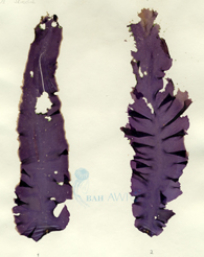
Porphyra dioica J. Brodie et L. M. Irvine
Extraction yields and protein content
The researchers reported that untreated samples demonstrated protein recoveries of 23.5±0.7% and 28.2±1.0% for water and NaOH extracts respectively. The application of ammonium sulfate precipitation followed by ultrafiltration produced extracts with substantially higher protein content, reaching 81.33±0.10% for water extracts and 77.61±0.81% for NaOH extracts.
According to the authors: “The protein content in PUF extracts was much higher than the protein content in untreated and UF extracts (ranging from 15 to 29%), with an almost total removal of other components.”
The purification process achieved near-complete elimination of carbohydrates and ash, with values dropping below 6% and 0.5% respectively in precipitated samples.
Structural modifications from processing
Circular dichroism analysis revealed that purification treatments caused alterations to protein secondary structure. Water extracts initially exhibited well-structured proteins with predominant α-helix conformations, which unfolded following purification treatments. The NaOH extraction produced proteins predominantly in random coil formations.
The research team observed that “the purification step caused changes in the structural characteristics of the extracted proteins, namely regarding the secondary structure.” However, these modifications did not preclude the development of functional properties suitable for food applications.
Gel permeation chromatography indicated molecular weight distributions ranging from 3 to 282 kDa across different extract types, with evidence of protein aggregation in several samples.
Functional properties for food formulation
The extracts demonstrated notable emulsifying and foaming capacities. Emulsifying capacity ranged from 72% to 100% across different treatments, with PUF extracts from water extraction maintaining 75% stability over seven days. Foaming capacity varied between 67% and 167%, with water extracts generally outperforming NaOH extracts in untreated samples.
The authors noted that “these did not prevent interesting functional properties from being obtained, such as emulsifying (72–100%) and foaming capacities (67–167%).”
Rheological assessment showed that none of the extracts formed gels at 15% concentration, attributed to the absence of gelling polysaccharides such as agar or carrageenan in P. dioica. However, all extracts exhibited pseudoplastic behaviour, with NaOH extracts demonstrating superior thickening capacity at higher concentrations.
Implications for food manufacturing
The findings suggest that food manufacturers can select specific extract types based on target functional requirements. The researchers concluded that “depending on the intended objective, different treated/untreated protein extracts can be chosen, targeting different functional properties, to be incorporated into the development of new food products.”
The study highlighted the environmental advantages of seaweed protein production, noting that algae cultivation requires less than 2.5 m²/kg protein compared to 144–258 m²/kg for beef production, whilst also requiring minimal freshwater and non-arable land.
The research team acknowledged that further process intensification studies are necessary to improve extraction yields and enhance economic feasibility at industrial scale. They identified emerging technologies as promising avenues for optimising protein extractability and efficiency.
The authors noted that “P. dioica extracts are a promising resource that can be studied as an alternative to animal proteins, to be used as texturizing food ingredients.”
This work was funded through the Pacto da Bioeconomia Azul project and the Portuguese Foundation for Science and Technology.
Reference
Nunes, R., Rodrigues, R. M., Moreira, C., et. al. (2026). Tailoring seaweed proteins: Impact of extraction techniques on functional properties. Food and Bioprocess Technology, 19, 128. https://doi.org/10.1007/s11947-025-04190-0