


Tufts University launches open-access cell bank for cultivated meat
Tufts University’s Center for Cellular Agriculture (TUCCA) has established an open-access cell bank to preserve and distribute cultivated meat technology from companies that have closed operations, partnering with the Good Food Institute to make proprietary cell lines publicly available to researchers and developers.
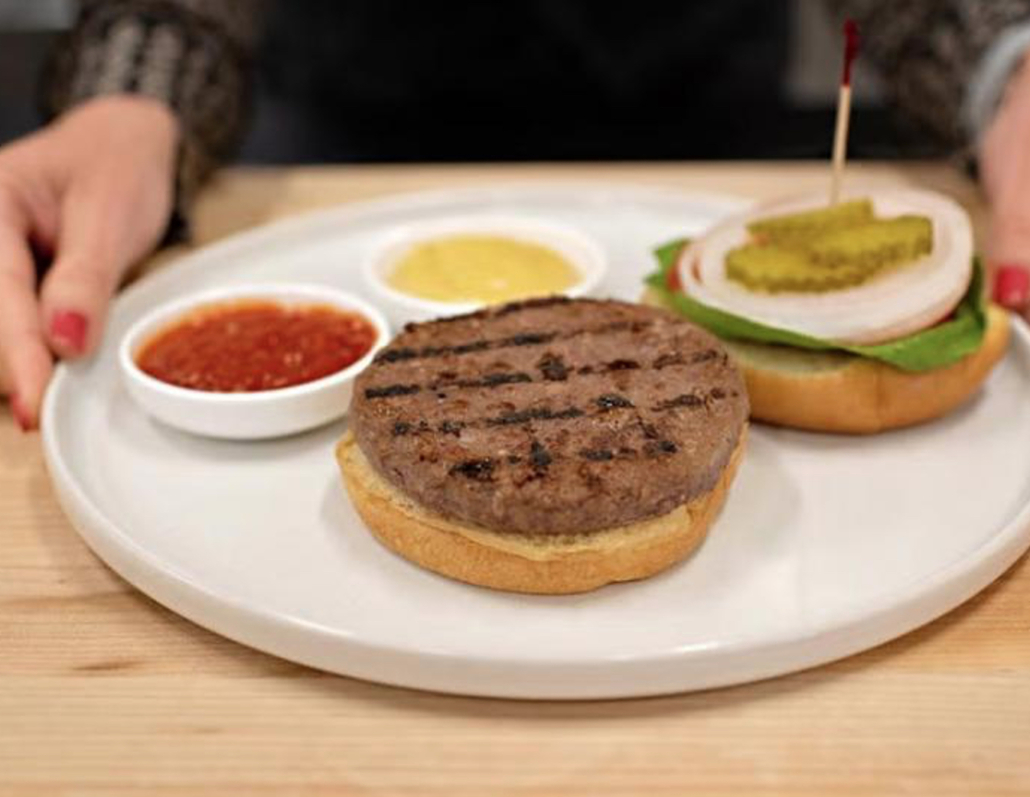
The cell grown meat product from SciFi Foods was positioned for FDA approval as a consumer product just before the company closed operations. TUCCA and Good Foods Institute purchased the cell lines to make them available to the industry for further development. © SciFi Foods
The initiative aims to salvage intellectual property from cultivated meat startups that have struggled during a two-year funding contraction in the sector. By acquiring and banking cell lines – cells that can be grown indefinitely in nutrient-containing media – the organisations seek to preserve years of research and millions of dollars in development work that would otherwise be lost.
SciFi Foods cell lines acquired at auction
The first major acquisition involved eight bovine cell lines and two serum-free media formulations from San Francisco-based SciFi Foods, which closed operations after raising $40 million across several funding rounds. The company had developed a hybrid burger containing 90% soy protein and 10% cultivated beef cells and had submitted its cultivated beef to the FDA for regulatory approval before closure.
The Good Food Institute purchased the cell lines at auction and transferred them to Tufts for storage, validation, and distribution. “We didn’t know who else might show up for the auction, but collectively agreed it would be a shame for SCiFI’s technology to get locked in a box somewhere, so we were excited that GFI decided to bid,” said Meera Zassenhaus, director of communications for TUCCA.
Single-cell suspension enables scalable production
The acquired cell lines include three commercially developed beef lines that have been modified using CRISPR gene-editing technology to grow indefinitely in culture. The cells have been adapted to grow in single-cell suspensions – floating freely in solution rather than requiring attachment surfaces – enabling large-scale production in bioreactors.
“The most exciting feature about the first cell lines is that they can be grown in single-cell suspension,” said Andrew Stout, assistant professor in Tufts’ biomedical engineering department who leads the cell bank efforts. “That allows for simple, large-scale production in bioreactors, making them the first such livestock-based cell lines broadly available to the field.”
Two of the cell lines have been further engineered to remove antibiotic resistance markers inserted during research and development, making them suitable for food applications.
Research applications and future expansion
Natalie Rubio, executive director of the Cellular Agriculture Commercialization Lab, explained the research potential: “There’s a lot of research that can be done about figuring out how to make other cell lines grow in single-cell suspension. The cells we acquired will open the door for some more scalable research, like bioreactor optimization.”
The cell bank will be housed in TUCCA’s planned future foods innovation hub, which will provide shared-use prototyping facilities, scale-up research infrastructure, incubator laboratory space for startups, and access to expert networks to accelerate cellular agriculture development.
Publicly available with minimal restrictions
“We’ll make them available with very few restrictions on use,” Stout said. Beyond the SciFi Foods lines, the TUCCA cell bank plans to offer additional cell lines developed at Tufts, including bovine, mackerel, and pork cells. An official waitlist form is available for researchers interested in accessing the materials.
The Cellular Agriculture Commercialization Lab is currently raising funds to build infrastructure and develop additional cells from various livestock and harvested animal species.
“We are essentially composting intellectual property, or IP, from an individual start-up and transforming it into a public good to benefit the entire field,” said Zassenhaus. “This model of IP re-use makes sense for all kinds of technologies even beyond alternative proteins, especially as climate tech broadly faces a contraction in funding.”
- For more information, visit: https://cellularagriculture.tufts.edu