Cold plasma and chiral TiO₂ composite coating extend cherry tomato shelf life and degrade pesticide residues
A synergistic system combining dielectric barrier discharge plasma with a chiral titanium dioxide/sodium alginate composite film has demonstrated significant advances in postharvest cherry tomato preservation, reducing microbial counts, extending shelf life by more than four days, and degrading chlorpyrifos pesticide residues to 65.86% – well below regulatory limits – without chemical preservatives.
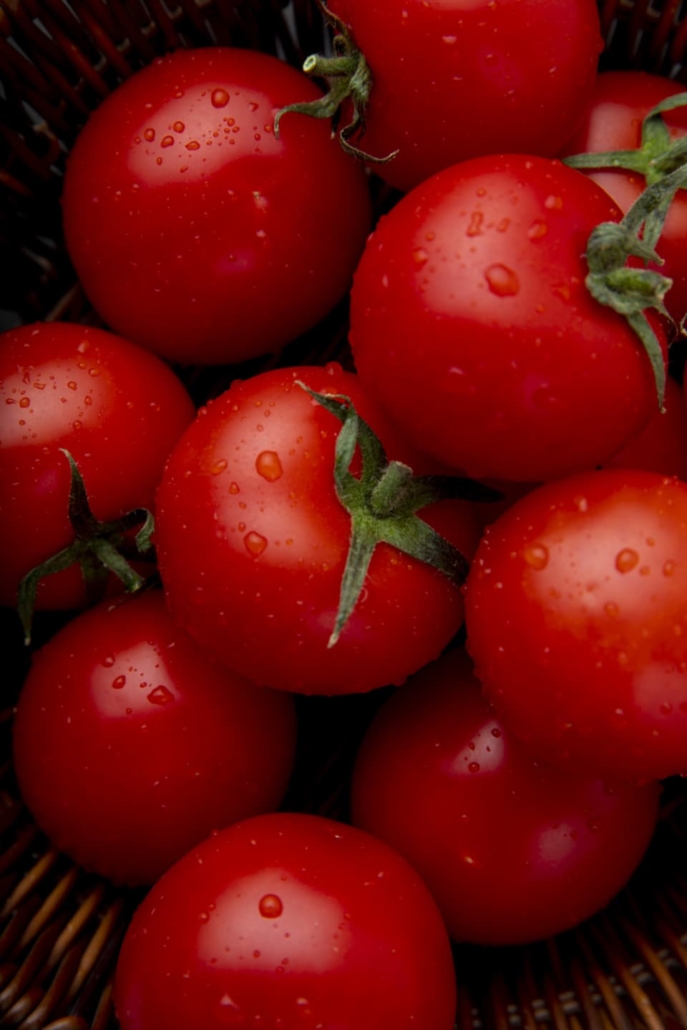
Cherry tomatoes present a particular challenge for postharvest management. Their thin epidermis and moisture content exceeding 90% render them highly susceptible to microbial spoilage and rapid quality deterioration. Compounding this, widespread agricultural use of organophosphate pesticides such as chlorpyrifos frequently results in surface residues that compromise food safety and consumer confidence. Existing mitigation strategies – physical, chemical, and biological – each carry limitations including incomplete degradation, toxic by-product formation, and poor scalability.
A study published in Food Materials Research on 30 January 2026 by Jie Zou’s team at the Jiangsu Product Quality Testing & Inspection Institute, in collaboration with Nanjing Agricultural University, addresses these dual challenges through an integrated physical–chemical approach. The research proposes combining a DAT/SA composite film – comprising D-cysteine/gold nanoparticle-modified titanium dioxide (DAT) embedded in a sodium alginate (SA) matrix – with dielectric barrier discharge (DBD) plasma treatment.
Composite film formulation and optimisation
DAT nanoparticles were synthesised via citrate reduction of gold salts, followed by surface functionalisation with SH-PEG and D-cysteine, and subsequent ultraviolet light-assisted photodeposition onto TiO₂. The resulting composites were dispersed in sodium alginate solutions at loadings of 0.1% to 0.4% by weight. Films were characterised for water solubility, water vapour permeability (WVP), transparency, and mechanical performance. The 0.3% DAT/SA formulation was selected for shelf-life trials on the basis of optimal barrier performance and mechanical integrity. Higher DAT loadings produced aggregation within the SA matrix, increasing surface roughness and WVP – counterproductive for moisture-sensitive produce.
Treatment protocol and storage conditions
Cherry tomatoes spiked with chlorpyrifos at 0.7 mg/kg – deliberately set above the Chinese national standard and EU maximum residue limit of 0.5 mg/kg – were divided into six treatment groups. Coated tomatoes were immersed in film-forming solution for ten seconds, air-dried at 25 °C, then exposed to DBD plasma at 140 kV, 50 Hz for three minutes. All samples were packaged in perforated boxes and stored at 15 °C under light for eleven days. Quality parameters including weight loss, decay rate, firmness, total bacterial count, mould and yeast counts, and soluble solid content were monitored throughout.
Microbial suppression and quality retention
The combined DBD + DAT/SA treatment delivered the strongest antimicrobial performance across the storage period. The authors report that the treatment “significantly enhanced chlorpyrifos degradation to 65.86% after 11 d, markedly outperforming individual DBD (48.17%) or film (54.17%) treatments. It also effectively preserved quality: total bacterial count was reduced by 1.28 lgCFU/g, the decay rate was lowered by 50.99%, and fruit firmness and moisture were better maintained.”
Control, DBD-only, and SA-only samples developed visible mould by day five and were fully spoiled by day eleven. By contrast, the DBD + DAT/SA group did not exhibit visible spoilage until day eleven, with decay onset delayed until day nine. Firmness in DAT-based treatments was 1.36 times that of untreated fruit by the study’s conclusion, attributed to retardation of protopectin enzymatic degradation. Weight loss was also significantly reduced, with DBD pretreatment likely improving coating adhesion and thereby maintaining fruit turgor.
Pesticide degradation mechanism
The mechanism underlying the enhanced chlorpyrifos degradation was attributed to photocatalytic activation. As the authors explain: “This synergistic effect can likely be attributed to the enhanced photocatalytic activity of DAT induced by the UV emission generated during DBD plasma treatment. The plasma-produced UV light may activate the DAT material within the composite film, promoting the generation of reactive oxygen species or other active sites that facilitate the breakdown of chlorpyrifos molecules.”
Notably, the SA-alone coating did not significantly enhance degradation relative to untreated controls, and the DBD + SA combination underperformed DBD alone – suggesting that standard alginate film partially impedes reactive species penetration to pesticide residues, a limitation the chiral TiO₂ nanoparticles are specifically designed to address.
Implications for food manufacturing
The researchers characterise the system as one that “suppresses microbial growth, degrades pesticide residues, and maintains fruit quality, significantly extending the shelf life of cherry tomatoes and offering a safer, more sustainable approach for fresh produce preservation.” For food manufacturers and postharvest technologists, the dual-function capability is particularly pertinent. Current regulatory pressure on chemical preservatives, combined with tightening maximum residue limits across multiple jurisdictions, creates commercial impetus for non-thermal, residue-free preservation technologies.
The authors acknowledge that scale-up remains the primary outstanding challenge, concluding that “this green, combined approach offers a promising alternative to conventional methods, with potential applications for other perishable horticultural products. Future work should focus on process optimisation for scalable implementation.” The energy costs associated with repeated DBD plasma treatment – a known constraint of the technology – may be partially offset by the sustained photocatalytic activity provided by the DAT/SA coating between treatment cycles.
Journal reference:
Song, J., Zhang, J., Cui, M., et al. (2026). Synergistic preservation and pesticide degradation of cherry tomatoes combined with DAT/SA composite film and DBD plasma. Food Materials Research, 6, e001. https://doi.org/10.48130/fmr-0026-0001