


Mood foods breakthrough: Scientists pinpoint the exact citrus compounds that calm your brain and lift your mood
Researchers at Zhejiang University have identified four key volatile compounds in citrus essential oils responsible for measurable emotional benefits, using a novel combination of electroencephalography, autonomic nervous system monitoring, and flavoromics analysis. The findings open new avenues for functional food design and nutraceutical applications targeting emotional wellbeing.
A landmark study published in Food Quality and Safety has provided the first objective, multimodal evidence linking specific aroma-active compounds in citrus essential oils (EOs) to quantifiable improvements in human emotional states. The research moves beyond self-reported data by integrating intelligent sensory technologies with advanced chemical profiling, offering the food science industry a molecular-level framework for formulating mood-enhancing products.
Study design and methodology
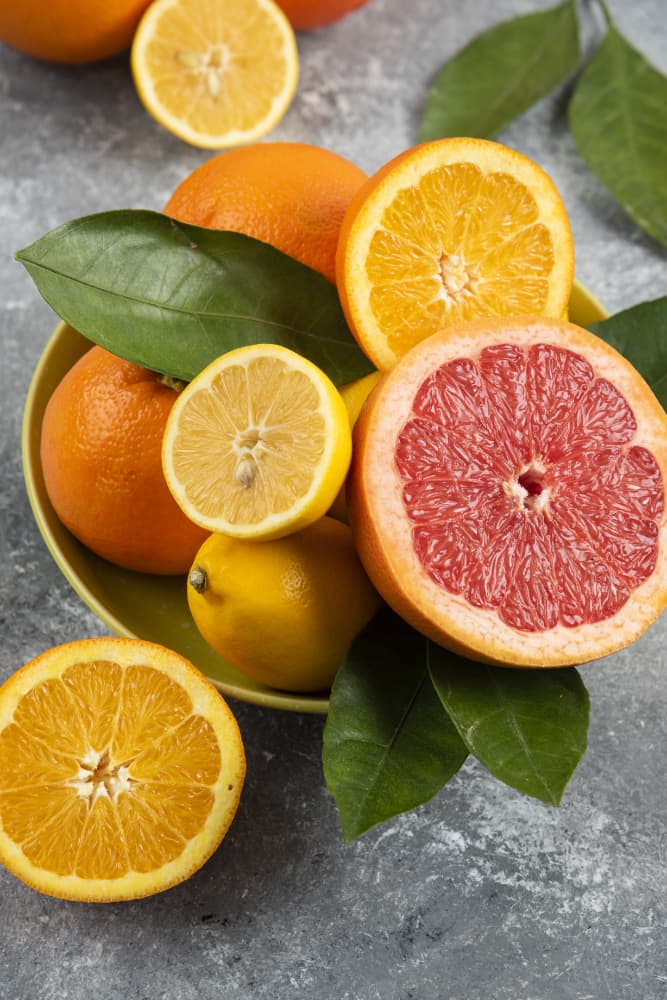
The research team examined the emotional impact of four commercially relevant citrus EOs – Gannan navel orange (NO), Taroco blood orange (BO), Changshan Huyou (HY), and South African ‘Star Ruby’ grapefruit (GF) – using a cohort of 20 healthy subjects aged 20–30 years. Isovaleric acid (IA), a compound known to elicit negative emotional responses, served as a control.
Emotional responses were captured through both explicit and implicit measurement methods. Explicit data were gathered using a modified Emotion and Odor Scale (EOS). Implicit physiological data were collected simultaneously via electrocardiogram (ECG), electrodermal activity (EDA), and a 64-channel electroencephalography (EEG) system. Aroma profiling was conducted using gas chromatography-olfactometry-mass spectrometry (GC-O-MS), with odour activity values (OAV) calculated for key compounds. Pearson correlation analysis was then applied to link differential aroma compounds with emotional response indicators.
Physiological evidence of relaxation
Participants exposed to citrus EOs demonstrated clear physiological markers of emotional relaxation. Skin conductance levels (SCL) decreased significantly during citrus EO inhalation, indicative of reduced sympathetic arousal, whilst the low-frequency to high-frequency heart rate variability ratio (LF/HF) fell markedly compared with the IA control – a pattern associated with enhanced parasympathetic activity.
EEG recordings revealed increased spectral power in the alpha (8–13 Hz) and delta (0.5–4 Hz) frequency bands, particularly in the frontal and parietal-occipital regions. Differential asymmetry (DASM) analysis further showed that NO, BO, and GF EOs promoted left-hemisphere dominance in parietal and occipital regions – a neural signature consistently associated with positive affect and approach behaviour. HY EO produced comparatively weaker positive signals across all measures.
The corresponding author noted: “By combining intelligent sensory technologies with flavoromics, we were able to objectively observe how citrus aromas interact with both the nervous system and the brain. This integrated approach helps explain why certain citrus scents consistently feel uplifting and relaxing, and it allows us to move beyond subjective descriptions toward measurable emotional mechanisms.”
Four key mood-regulating compounds identified
Flavoromics analysis identified 67 aroma-active compounds across the four citrus EOs, of which 23 with flavour dilution (FD) factors ≥16 and modified frequency (MF) values ≥65% were considered significant contributors to the overall aroma profile. OAV calculations confirmed that D-limonene, β-myrcene, β-sinensal, geraniol, α-terpineol, and linalool exhibited exceptionally high OAVs, in some cases exceeding 10,000.
Subsequent Pearson correlation analysis, cross-referenced with physiological and neurophysiological indicators, narrowed the field to four primary mood-regulating molecules. As the authors state: “D-limonene, linalool, α-terpineol, and geranial emerged as key odorants positively associated with emotional regulation in citrus EOs.” D-limonene correlated strongly with subjective happiness and peacefulness, as well as increased DASM. Linalool was linked to reduced SCL and increased DASM, suggesting a calming effect. Both α-terpineol and geranial showed significant negative correlations with disgust and melancholy. Geranial, despite lacking a commercial reference standard for full quantification, was estimated to carry an OAV of 41,550 – a figure the authors describe as confirming it as “a critical aroma-active compound in citrus EOs.”
Implications for functional food and nutraceutical development
The research carries substantive implications for the food manufacturing and ingredient sectors. The authors conclude that the findings “underscore the potential of citrus EOs as functional ingredients for emotion-oriented applications in food, beverage, and wellness contexts,” whilst acknowledging that “further validation in real-world food matrices and actual dietary environments is needed.”
The precise identification of mood-active volatiles enables formulators to move beyond broad citrus characterisation towards targeted ingredient selection. The authors noted: “Identifying specific mood-regulating aroma compounds enables more precise formulation of functional foods and nutraceuticals aimed at stress relief and emotional balance.” Applications could extend to aroma-enhanced packaging materials, beverages, confectionery, and consumer wellness products.
The study also highlights the methodological value of combining EDA, ECG, and EEG data: “a combined analysis of EDA, ECG, and EEG can provide a more comprehensive understanding of the hidden emotional responses elicited by citrus EOs,” the authors note – a framework applicable across broader sensory science research.
Future work, the team suggests, should examine a wider range of citrus species and demographic groups, and explore how citrus EOs function within non-citrus food matrices, to advance personalised emotional nutrition strategies.
Reference:
Ye, Z., Liu, F., Chen, J., et al. (2026). Integration of intelligent sensory techniques and flavoromics to elucidate the emotion-regulating mechanisms of citrus essential oils aroma. Food Quality and Safety, 10, fyaf085. https://doi.org/10.1093/fqsafe/fyaf085