


Radio Frequency Company validates Macrowave RF pasteurisation of rice flour for infant formula
RF pasteurisation technology from Radio Frequency Company of Millis, MA has been fully validated for rice flour used in infant formula, achieving a greater than 5 log reduction in microbial load, including salmonella, E. coli and listeria.
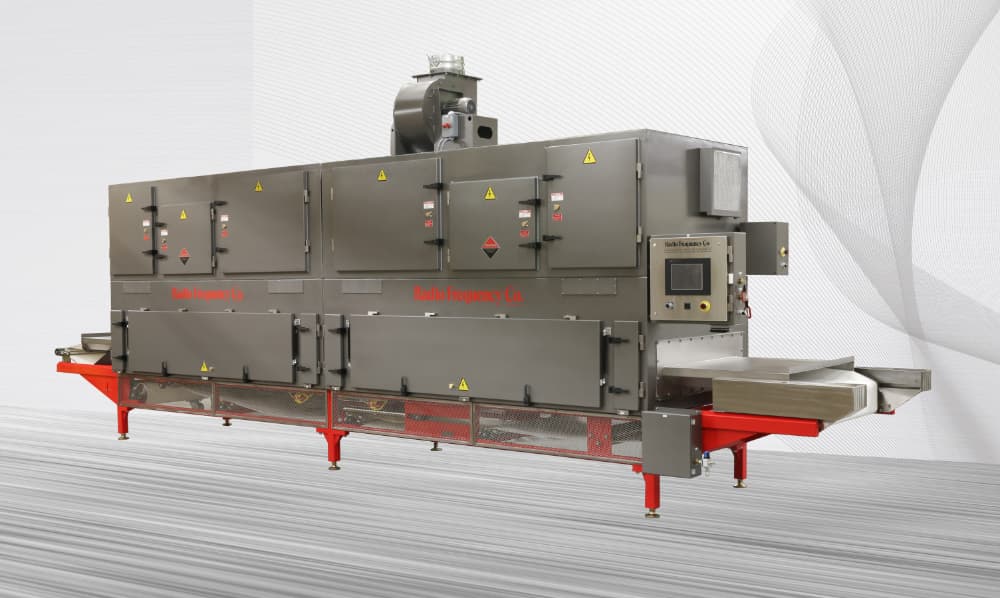
The validation represents a significant milestone for dry ingredient safety in infant formula manufacturing, where microbial control of ready-to-eat (RTE) ingredients poses an ongoing technical challenge.
How the RF pasteurisation process works
Radio frequency heating exploits the polar nature of water molecules, which respond thermally when exposed to an alternating electromagnetic field. In the Macrowave™ system, an RF generator creates this alternating electric field between two electrodes positioned above and below a conveyor. The result is rapid, uniform heating throughout the full thickness of the product – whether processed in bags or loose on a troughed conveyor.
Crucially, RF volumetric heating eliminates the surface-to-centre temperature differential associated with conventional thermal methods. This removes the need for prolonged soak times that can compromise protein functionality, and the rapid temperature rise limits the capacity of microbes to develop thermotolerance.
Regulatory and labelling compatibility
RF heating is a non-ionising electromagnetic thermal process. The USDA does not classify it as an added ingredient, meaning organically certified products can retain their certification post-treatment. The FDA similarly does not consider RF processing to invalidate a “natural” label claim – a distinction that sets it apart from irradiation, which requires regulatory approval and mandatory labelling.
The Macrowave process is described as USDA Organic, FDA Clean Label, and FSMA compatible.
Scale and commercial readiness
RF pasteurisation is not an emerging laboratory technique. Radio Frequency Company reports that its Macrowave systems collectively process over 1.5 billion pounds of product per annum across domestic and international facilities.
For food scientists working in infant nutrition or dry ingredient processing, the validation data supporting >5 log pathogen reduction offers a technically robust and label-friendly alternative to conventional heat treatments.
- For more information, visit: radiofrequency.com