


Safe ARA oils for infant formula: Innovative new process eliminates bacterial toxin
Nutriswiss develops method for eliminating cereulide in ARA oils
Earlier this year, the detection of bacterial toxin cereulide in baby formula hit the headlines, impacting consumer confidence and leading to a wave of product recalls across Europe. The contamination was caused by oils containing arachidonic acid from a Chinese manufacturer, thought to result from risks in the manufacturing process, as well as gaps in analytical procedures and HACCP (Hazard Analysis and Critical Control Point) concepts. Frank Möllering, Head of R&D at Nutriswiss AG, reports that the company has carried out successful reduction studies to eliminate this ongoing contamination hazard using adapted refining steps.
The cereulide issue perfectly illustrates the food safety risks posed by international, highly connected supply chains. In this case, a Chinese manufacturer produced ARA oil – which is used to enrich infant formula or food supplements with long-chain, omega-6 fatty acids from non-animal sources – on a large scale and therefore supplied numerous customers. However, if production batches are contaminated without being noticed, the problem spreads to manufacturers and, ultimately, end products.
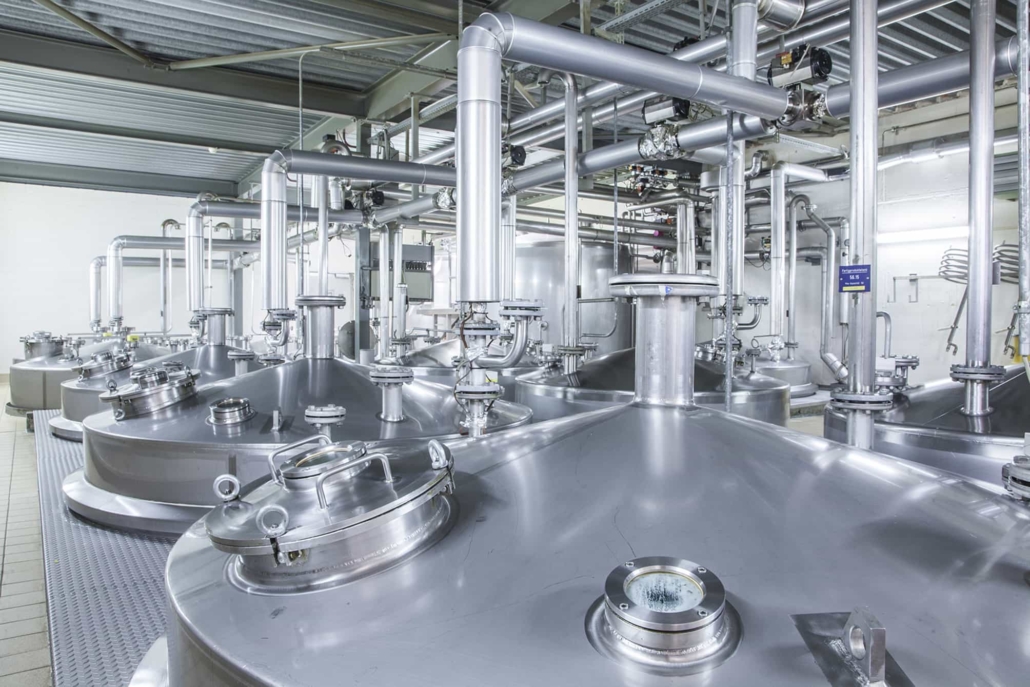
Through a specific combination of process steps, process conditions and various additives, Nutriswiss has succeeded in reducing cereulide levels in ARA oil to below 0.1 ppb
CREDIT: ©Nutriswiss
Highly dangerous contamination
ARA oil is usually produced on an industrial scale through aerobic, heterotrophic fermentation in bioreactors. The fungus Mortierella alpina produces economically viable quantities of long-chain, polyunsaturated fatty acids in the liquid medium, including arachidonic acid, which accounts for around 30 to 40 per cent of fatty acids as the main component. Once fermentation is complete, the resulting ARA oil is extracted and refined using conventional steps such as winterisation, bleaching and deodorisation. However, contamination of the fermentation batch with Bacillus cereus strains that produce cereulide can occur if there are gaps in microbiological analysis. As a spore-forming bacterium, it can also survive disinfection and sterilisation. However, cereulide can also enter the fermentation batch via sterile culture media and become concentrated during purification, as it can accumulate in the oil phase. Glucose usually serves as the main carbon source in the medium and, on an industrial scale, this is primarily obtained from maize, wheat and rice. Emetic poisoning caused by cereulide contamination in cooked, improperly stored and reheated rice
can be highly dangerous for infants and young children.
Bacillus cereus may therefore have been present during initial processing of the raw materials. A chain of events, including raw material contamination, spore germination during the fermentation process and concentration in the final product, leads to very high cereulide concentrations in ARA oil. Once this highly resistant toxin is present in the product, it cannot be removed by conventional refining steps such as deodorisation, acid and alkali treatment, washing and filtration.

Frank Möllering, Head of Research & Development at Nutriswiss
CREDIT: ©Nutriswiss
Three-stage safety concept
The fact that the bacterial contamination went undetected throughout all processing steps right through to end product highlights inherent risks in the structure of supply chains. A Hazard Analysis and Critical Control Points (HACCP) system is designed to identify potential food safety hazards in operational processes and thus allow for their elimination – however, such a system is only effective if potential risk is given due consideration. Microbiological testing for the presence of spore-forming bacteria is a given, but until recently there was little awareness of potential cereulide contamination in oils.
Global food supply chains comprise raw material producers, traders, processors and distributors – along with intermediaries who often do not provide full transparency – and ad hoc ingredient sourcing. As these factors may result in raw material mixtures that cannot be easily traced, no stage should rely solely on the supplier’s HACCP, defined control points or analysis results. In short, random audits and supplier certificates are no substitute for genuine process control. Nutriswiss boasts a three-stage safety concept: analysis of supplier samples prior to dispatch, comprehensive incoming goods checks and stage-by-stage controls throughout the refining process through to finished end product.
Groundbreaking success
With the European Commission’s Implementing Regulation (EU) 2026/459 of February 24, 2026, ARA oils from China in which cereulide is detectable – i.e. where the concentration exceeds the limit of quantification (LOQ) of 0.1 µg/kg – are effectively not marketable. According to the regulation, 50% of ARA oil consignments imported from China into the European Union must be tested for the contaminant. Nutriswiss AG, as a specialist in the refinement of high-quality, tailor-made edible fats and oils, is not affected by the current cereulide issue but does refine oils supplied by customers for infant formula.
In order to find ways of eliminating cereulide from affected batches through the modification of refining steps, the Nutriswiss R&D team obtained a sample of contaminated ARA oil from a supplier. A short-term study was then conducted to investigate how cereulide levels could be reduced through technological measures to such an extent that they fall below the limit of quantification and thus pose no risk to health. Through a specific combination of process steps, conditions and additives, an initial series of trials succeeded in reducing the sample’s original cereulide content of 200 ppb to below 0.3 ppb during refining – a reduction of approximately 99.99 per cent. In subsequent trials, the process sequence was further optimised. Independent analysis demonstrated groundbreaking success, as the analytical detection limit for cereulide content of <0.1 ppb was achieved. The complete removal of this chemically stable contaminant means that EU requirements can be met and affected ARA oils purified, and therefore marketable. [/av_textblock] [av_hr class='default' icon_select='yes' icon='ue808' position='center' shadow='no-shadow' height='50' custom_border='av-border-thin' custom_width='50px' custom_margin_top='30px' custom_margin_bottom='30px' custom_border_color='' custom_icon_color='' av-desktop-hide='' av-medium-hide='' av-small-hide='' av-mini-hide='' id='' custom_class='' av_uid='av-14c8th5'] [av_image src='https://fei-online.com/wp-content/uploads/sites/4/2026/06/infant-1030x687.jpeg' attachment='13856' attachment_size='large' copyright='' caption='' styling='' align='center' font_size='' overlay_opacity='0.4' overlay_color='#000000' overlay_text_color='#ffffff' animation='no-animation' hover='' appearance='' link='' target='' title_attr='' alt_attr='' id='' custom_class='' av_element_hidden_in_editor='0' av_uid='av-mq0ulc9u' admin_preview_bg=''][/av_image] [av_textblock size='' av-medium-font-size='' av-small-font-size='' av-mini-font-size='' font_color='' color='' id='' custom_class='' av_uid='av-23o2c4' admin_preview_bg=''] The detection of bacterial toxin cereulide in baby formula hit the headlines earlier this year, impacting consumer confidence and leading to a wave of product recalls across Europe.