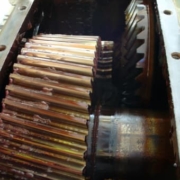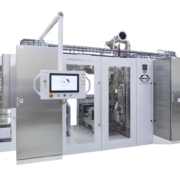
BEHN + BATES has introduced the INTEGRA IV series, a valve bag packing system designed to address hygiene and efficiency requirements in food manufacturing facilities. The German equipment manufacturer is positioning the system as an integrated solution for producers handling flour, starch, cocoa, sugar and other food products.
https://fei-online.com/wp-content/uploads/sites/4/2026/01/BEHNBATES_INTEGRA_web.jpg9421413panglobalhttps://fei-online.com/wp-content/uploads/sites/4/2020/06/fei-online-logo.pngpanglobal2026-01-21 08:00:302026-01-22 13:39:04BEHN + BATES launches INTEGRA IV valve bag packing system with AI quality control
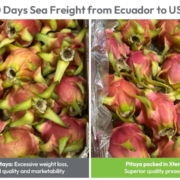
Israeli packaging specialist StePacPPC has developed a modified atmosphere/modified humidity (MA/MH) packaging solution specifically designed to preserve the freshness and appearance of pitaya (dragon fruit) during extended ocean freight from South America to global markets.
Nutriswiss AG, a leading Swiss specialist in sourcing and processing high-quality vegetable oils and fats, has set an ambitious target to achieve climate-neutral production within the next six years. This move highlights the growing trend in the food industry towards sustainable manufacturing practices.
The second annual MISTA Growth Hack brings together food-tech start-ups and global food companies to focus on innovating biomass fermentation, with the aim of addressing future nutritional and sustainability challenges.
Innovia Films has introduced a novel semi-cavitated film designed for in-mould labelling of large format containers, offering potential benefits for food packaging manufacturers.
https://fei-online.com/wp-content/uploads/sites/4/2024/09/In-Mould-Film-bucket.jpg10001009panglobalhttps://fei-online.com/wp-content/uploads/sites/4/2020/06/fei-online-logo.pngpanglobal2024-09-13 10:37:462026-01-22 13:39:25Innovia unveils new in-mould film for large food containers
Amcor’s new Clear-Tite 40 shrink bag offers a 19% weight reduction compared to standard 50µ bags, potentially lowering EPR fees for meat processors while maintaining product freshness and visual appeal.
https://fei-online.com/wp-content/uploads/sites/4/2024/09/shrinkwrap.jpg6301218panglobalhttps://fei-online.com/wp-content/uploads/sites/4/2020/06/fei-online-logo.pngpanglobal2024-09-13 10:02:492026-01-22 13:39:37Amcor introduces ultra-thin shrink bag for meat packaging
In a significant development for the food industry, the non-profit organisation Foundation Earth has been integrated into EIT Food, the world’s largest food innovation community. This merger aims to establish internationally recognised standards for assessing the environmental impact of food products, a crucial step towards a more sustainable food system.
The next wave of technological progress to sustain the world’s fast-growing global population will capitalize on artificial intelligence (AI) and the Internet of Things (IoT) to improve the precision and sustainability of farming techniques.
AI, IoT, connected services and autonomous systems together enable farmers to make decisions at the level of a single square metre or individual plant or animal, rather than entire fields or all livestock. This precision allows well-informed interventions that ultimately improve agricultural sustainability by helping farmers produce more with less.
A new International Telecommunication Union (ITU) Focus Group dedicated to ‘AI and IoT for digital agriculture’ [1] will examine emerging cyber-physical systems as groundwork for standardization to stimulate their deployment for agriculture worldwide.
“The projection that our planet will host 9.7 billion people by 2050 necessitates significant technological progress to sustain so many lives,” said Houlin Zhao, ITU Secretary-General. “This new focus group is the beginning of a global drive to ensure equitable access to the new capabilities emerging in agriculture with advances in digital technology.”
Collaboration with FAO
The focus group will work in close collaboration with the Food and Agricultural Organization of the United Nations (FAO), which mobilizes international efforts to defeat hunger and improve nutrition and food security.
Under the group’s purview will be new capabilities to discern complex patterns from a growing volume of agricultural and geospatial data; improve the acquisition, handling, and analysis of these data; enable effective decision-making; and guide interventions to optimize agricultural production processes.
Dejan Jakovljevic, Chief Information Officer and Director of FAO’s Digitalization and Informatics Division, said: “New digital capabilities offer us a unique and immediate opportunity to transform food systems and accelerate impact towards zero hunger. The new focus group will significantly contribute towards these efforts, bringing together AI and IoT as key enablers behind new capabilities for digital agriculture.”
The envisaged study aims to support global progress in areas such as precision farming, predictive analytics for smart farming, the optimization of cultivable acreage, remote cattle monitoring and management, agricultural robotics, and greenhouse automation.
The study will pay particular attention to the needs of developing countries where people’s livelihoods are most reliant on agriculture. Those are also the countries where digital solutions can provide the greatest gains in agricultural sustainability and resilience.
Focused on smart communities
The focus group will report to ITU’s standardization expert group for ‘IoT and smart cities and communities’, ITU-T Study Group 20 [2].
The new focus group is open to all interested parties.
It comes alongside the establishment of the new Correspondence Group for ‘Artificial Intelligence of Things’ (also under ITU-T Study Group 20), aimed at developing guidelines for future standardization work related to IoT and smart cities and communities.
ITU-T Study Group 20 has also reached first-stage approval (‘consent’) of the LoRaWAN specification as an ITU standard. This transposition of the low-power protocol for wide area networks into a new ITU standard intends to support the protocol’s adoption globally.
https://fei-online.com/wp-content/uploads/sites/4/2022/04/farm.jpg9571701panglobalhttps://fei-online.com/wp-content/uploads/sites/4/2020/06/fei-online-logo.pngpanglobal2022-04-01 10:35:522022-04-01 10:35:52ITU and FAO focus on helping farmers embrace artificial intelligence and the Internet of Things
Simone Boitelle, Director Global Corporate Affairs FrieslandCampina (left), Yann-Gaël Rio, Danone’s Global Vice-President for Nature & Agriculture (centre) and member dairy farmer Edwin Daatselaar (right)
A three year collaboration between FrieslandCampina and Danone has led to more than 17% reduction in greenhouse gas (GHG) emissions (measured from 2015 to 2020). This reduction has been realised through FrieslandCampina’s dairy farmers implementing sustainable farming practices and green energy projects. This is applied for dairy ingredients specifically provided to Danone. FrieslandCampina used the Annual Nutrient Cycling Assessment to track progress resulting from the sustainable farming practices. This extensive monitoring tool is used by almost 10,000 FrieslandCampina member dairy farms and gives farm specific insights, such as the size of their carbon footprint.
Committed to making our food system more sustainable, FrieslandCampina and Danone are both running extensive sustainability programmes to reduce their environmental impact. Both companies have committed to reaching net zero, as one of their climate goals, as well as improving soil health and biodiversity. One of the ways to achieve these goals is through regenerative agriculture practices. FrieslandCampina and Danone both want to support farmers on the journey towards a sustainable future, which led to this partnership.
Net zero and nature-positive
Simone Boitelle, Director Global Corporate Affairs FrieslandCampina noted: “For over 150 years already, FrieslandCampina believes in cooperation to achieve great results. And this collaboration is yet another great example. Supporting farmers to produce milk in balance with nature, is the key to a more sustainable, climate neutral and nature positive future. I am very proud of our member farmers who make this possible, they deserve the stage for these strong results!”
Yann-Gaël Rio, Danone’s Global Vice-President for Nature & Agriculture, added: “Sustainable dairy farming is a key priority in Danone’s journey to achieving net zero emissions. This partnership demonstrates that by combining our expertise, we can accelerate the adoption of regenerative agriculture practices to help reduce the climate impact of dairy farming. While this is a great step, there is more to be done, and we are looking forward to supporting more farmers in their transition by extending this partnership for an additional three years.”
What did the FrieslandCampina dairy farmers do?
Depending on the nature of their farm, dairy farmers can take different measures to reduce their greenhouse gas emissions. The impacts from the measures implemented were tracked through the Annual Nutrient Cycling Assessment. Some examples of the measures taken are:
More protein harvested from their own farm land, further reducing the impact from sourcing feed from far away;
Optimising the cow’s diet composition: keeping a well-balanced nutritious diet that supports animal health and welfare, while reducing enteric methane emissions;
Energy measures: generating green electricity through use of solar panels, windmills and manure digesters; avoiding fossil fuels through bio-based diesel and/or reducing energy use (for example by recovering heat from milk cooling). In addition the manure digesters not only generate renewable electricity but also help to reduce methane emissions through manure storage.
What’s next for regenerative farming?
The positive results from this partnership encouraged Danone and FrieslandCampina to extend the collaboration for an additional three years. The two companies will continue their efforts together with the goal to reduce GHG emissions resulting from the production of ingredients sourced from FrieslandCampina by over 7%. This would result in almost a 25% GHG emission reduction over the course of the multi-year collaboration.
In the coming years, FrieslandCampina and Danone say they will continue their joint efforts to create innovative solutions to scale up and accelerate the transition to regenerative farming.
https://fei-online.com/wp-content/uploads/sites/4/2022/02/friesland.jpg8061701panglobalhttps://fei-online.com/wp-content/uploads/sites/4/2020/06/fei-online-logo.pngpanglobal2022-02-04 10:37:192022-02-04 10:37:19FrieslandCampina-Danone collaboration leads to 17% greenhouse gas reduction
Two thirds of consumers living in the UK, Denmark, Sweden and Germany do not see nutrition as part of a sustainable diet, which could lead to them becoming ‘nutrition blind’ and have unintended consequences for their health. These are the findings of a recent survey of more than 8,000 consumers in these countries conducted by YouGov on behalf of Arla Foods, a Danish multinational cooperative and Scandinavia’s largest producer of dairy products.
While most consumers in the four countries say that they try to make sustainable choices wherever they can, their focus is mostly on carbon footprint, biodiversity, packaging and animal welfare. The nutritional value of the food product is to a much lesser extent being considered when choosing a sustainable diet. Only one in three (34%) consumers say that they associate nutrition with sustainable diets.
Sustainable diets, as defined by the Food and Agriculture Organisation of the United Nations, consist of multiple essential components which include the environmental impact but also the nutritional value of the diet.
Professor Judy Buttriss, public health nutritionist and former Director General of the British Nutrition Foundation from 2007 to 2021 commented on the survey results: “It’s great that we continue to grow our awareness of how food production and our diets affect the climate and nature. However, this research shows that many people tend to overlook the other determinants of sustainable diets, especially nutrition, which has always been the fundamental purpose of food and an essential factor for our long-term physical and mental well-being. Becoming ‘nutrition blind’ can have unintended consequences for our health and we need to bring nutrition back into the conversation about sustainable diets.”
Hidden hunger
With more than half of the European population overweight and every sixth person obese according to the World Health Organization (WHO), overnutrition is by far the most serious nutrition-related health issue in Europe. However, there is also a third and more hidden problem in both developing and developed countries, which is often seen in combination with obesity: low intakes of micronutrients (vitamins and minerals).
Lea Brader, Nutrition Scientist, Arla Foods, explained: “People at risk of micronutrient deficiency might not realise it. If your diet is poor, you can still get your energy from the macronutrients such as carbohydrate and fat. However, you don’t necessarily get sufficient amounts of micronutrients such as iron, zinc, calcium, iodine, vitamin A, B-vitamins, and vitamin C. This is why micronutrient deficiency is also called ‘hidden hunger’.”
WHO has estimated that more than two billion people globally suffer from ‘hidden hunger’ and that 20% of these are Europeans. In the UK, the National Diet and Nutrition Survey has documented a general decline in intake of some vitamins and minerals over the period from 2008 to 2017, particularly in adolescents. For example, the survey shows that approximately every fifth teenage girl and around every seventh teenage boy in the UK has a low intake of calcium, vitamin B2 and iodine.
Dietary guidelines
Encouragingly, Arla’s survey shows a clear desire among Northern European consumers to find out more information about how to make their diets more sustainable. However, half (49%) of them feel confused about how to eat sustainably and 52% state that they would like more information.
Brader said: “With tonnes of information in the public domain that may or may not be scientifically validated, it can certainly be difficult to decide on what to eat to stay healthy and live sustainably. A good place to start is to follow your national dietary guidelines.”
Official dietary guidelines promote diets that are nutritious, accessible, affordable and culturally acceptable. More and more countries have started to also include consideration of the climate impact of the food as well as food waste issues.
Key results of the survey
The survey was conducted by YouGov of 8,212 consumers in the UK, Denmark, Sweden and Germany from 20-24 September 2021.
Only 34% associate nutrition with sustainable diets – 66% do not consider it a feature of sustainable diets.
The majority associate environmentally friendly (58%) and locally produced (52%) to be features of sustainable diets
63% say they try to make sustainable food choices whenever they can
49% feel confused about how to eat sustainably
52% would like more information about how to choose a sustainable diet
FAO’s definition of sustainable diets
‘Sustainable Diets are those diets with low environmental impacts which contribute to food and nutrition security and to healthy life for present and future generations. Sustainable diets are protective and respectful of biodiversity and ecosystems, culturally acceptable, accessible, economically fair and affordable; nutritionally adequate, safe and healthy while optimizing natural and human resources.’ https://www.un.org/en/academic-impact/shifting-sustainable-diets
https://fei-online.com/wp-content/uploads/sites/4/2022/01/sustainable_food.jpg17011134panglobalhttps://fei-online.com/wp-content/uploads/sites/4/2020/06/fei-online-logo.pngpanglobal2022-01-25 11:20:202022-01-25 11:20:20Most consumers in UK, Denmark, Sweden and Germany do not see nutrition as part of sustainable diets – Arla Foods survey
We may ask you to place cookies on your device. We use cookies to let us know when you visit our websites, how you interact with us, to enrich your user experience and to customise your relationship with our website.
Click on the different sections for more information. You can also change some of your preferences. Please note that blocking some types of cookies may affect your experience on our websites and the services we can provide.
Essential Website Cookies
These cookies are strictly necessary to provide you with services available through our website and to use some of its features.
Because these cookies are strictly necessary to provide the website, refusing them will affect the functioning of our site. You can always block or delete cookies by changing your browser settings and block all cookies on this website forcibly. But this will always ask you to accept/refuse cookies when you visit our site again.
We fully respect if you want to refuse cookies, but to avoid asking you each time again to kindly allow us to store a cookie for that purpose. You are always free to unsubscribe or other cookies to get a better experience. If you refuse cookies, we will delete all cookies set in our domain.
We provide you with a list of cookies stored on your computer in our domain, so that you can check what we have stored. For security reasons, we cannot display or modify cookies from other domains. You can check these in your browser's security settings.
.
Google Analytics Cookies
These cookies collect information that is used in aggregate form to help us understand how our website is used or how effective our marketing campaigns are, or to help us customise our website and application for you to improve your experience.
If you do not want us to track your visit to our site, you can disable this in your browser here:
.
Other external services
We also use various external services such as Google Webfonts, Google Maps and external video providers. Since these providers may collect personal data such as your IP address, you can block them here. Please note that this may significantly reduce the functionality and appearance of our site. Changes will only be effective once you reload the page
Google Webfont Settings:
Google Maps Settings:
Google reCaptcha settings:
Vimeo and Youtube videos embedding:
.
Privacy Beleid
U kunt meer lezen over onze cookies en privacy-instellingen op onze Privacybeleid-pagina.