


Why drying, traceability and specification-control are vital in botanical ingredients
Dr Abdüssamet Ataseven of Organicure examines how drying, incoming-lot classification, traceability and specification-control convert variable botanical raw materials into reliable, export-ready ingredients. He analyses the technical and commercial consequences of poor control, from lost saleable yield to rejected shipments, and argues that competitiveness for processors in Türkiye depends on integrated, specification-driven systems that international buyers can purchase with confidence.
Abstract
Botanical ingredients begin as agricultural products, but they are sold into markets that expect industrial reliability. Leaves, flowers, roots and other plant materials arrive with natural variation in moisture, maturity, cleanliness and handling history, while buyers expect clear specifications, traceable lots and consistent shipments. This makes the processor’s role broader than operating drying equipment. The real task is to organise a chain that connects sourcing, incoming-lot classification, drying, stabilisation, sorting, testing, documentation and export delivery. Each stage has a technical purpose, but each also has a commercial consequence. Poor control can reduce saleable yield, delay shipments, tie up working capital or turn a seemingly good lot into a rejected one. Well-designed systems do the opposite: they make agricultural variation manageable. For botanical processors in Türkiye and other sourcing countries, competitiveness increasingly depends on this ability to convert variable raw materials into reliable, specification-driven ingredients that international buyers can purchase with confidence.

Dr Abdüssamet Ataseven
Background and industry context
The botanical trade sits between two very different worlds. Agriculture is naturally variable; industrial purchasing is increasingly specification-driven. The same species can arrive with different leaf sizes, colour, moisture, stem content or contamination risk depending on growing area, harvest date, weather and post-harvest handling. Research on bay leaves shows that processing conditions can also influence quality characteristics [1]. For a buyer, however, those variations do not remove the need for consistency. A shipment is still expected to meet an agreed specification.
That gap between agricultural reality and buyer expectation is where the processor creates value. The commercial proposition is not simply “a dried herb from a particular origin”. It is a lot that can be identified, processed consistently, checked against the buyer’s requirements and supported by documentation. This changes the meaning of quality control. It becomes part of purchasing, production planning, supplier management, inventory control and customer service rather than a final laboratory step.
Food-safety and residue requirements reinforce this shift. Codex guidance for low-moisture foods places emphasis on hygiene and contamination prevention throughout processing [2,3], while European Union rules set maximum residue levels for pesticides in foods of plant origin [4]. Traceability requirements also mean that businesses must know where material came from and where it went [5]. These rules are important in themselves, but exporters experience them in a practical way: a non-conforming lot can mean additional tests, resorting, delayed dispatch, price pressure or rejection.
Türkiye is well placed in this market because it combines agricultural access, a long tradition in herbs and spices, processing capability and proximity to major trade routes. The opportunity is therefore larger than exporting raw origin. It lies in building systems that make origin dependable at industrial scale.
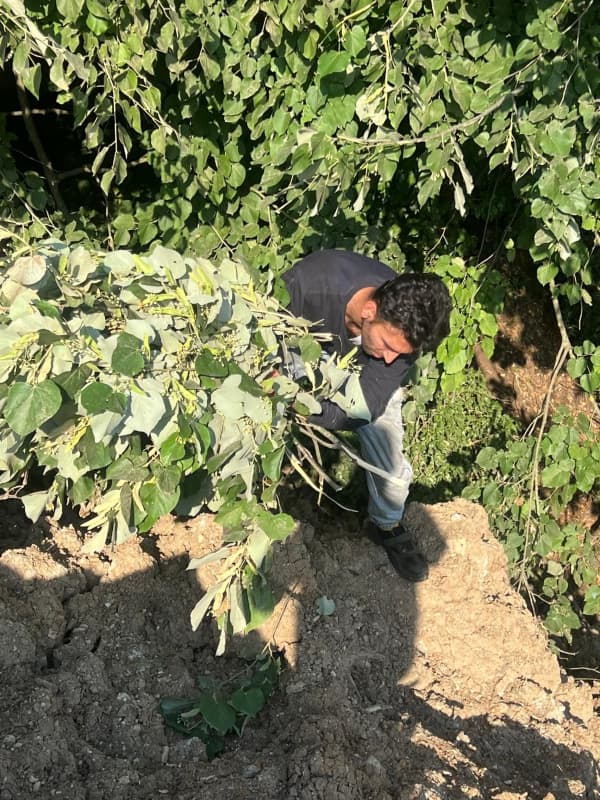
Field collection of botanical raw material in Türkiye.
Discussion
1. Drying is both a production decision and a commercial decision
Drying is often discussed as a technical operation, but for a processor it is also a yield and margin decision. Fresh botanical material is purchased by weight, transported, handled and then converted into a much lighter dry product. Too little drying can create instability or specification problems. Excessive drying may reduce saleable mass and increase breakage. The commercial target is therefore not the lowest possible moisture; it is a stable product within the agreed specification, produced with repeatable yield.
This is why simple process records matter. Incoming weight, outgoing dry weight, batch identity, drying duration, operating conditions and final moisture allow managers to compare lots and understand where value is being created or lost. The purpose is not to turn management into laboratory work. It is to give purchasing, production and sales a common set of facts. When a buyer asks why one lot differs from another, the company should be able to answer from records rather than memory.
2. Incoming-lot classification turns procurement into a controllable system
Many quality problems are already present before material enters the dryer. If raw material from different suppliers, harvest dates or quality levels is mixed too early, later processing has to compensate for variation that should have been managed at receipt. Incoming-lot classification is therefore one of the most commercially significant controls in the plant.
A practical receiving system can record supplier, origin, harvest information where available, visible cleanliness, moisture condition, leaf-to-stem ratio, colour, odour and any risk information relevant to the destination market. The objective is not to create unnecessary paperwork. It is to decide whether a lot should be accepted, separated, sampled, downgraded, processed differently or rejected. That decision protects both production efficiency and the sales promise made to the customer.
Seasonality makes this more important. Botanical crops often arrive in concentrated periods, so purchasing decisions are made while production capacity, storage space and cash are all under pressure. If the receiving system cannot distinguish stronger material from weaker material quickly, the company risks using the same processing route and sales expectation for lots that should have been managed differently. Classification therefore supports capacity planning as well as quality.
Supplier records also improve purchasing over time. Repeated issues can be linked to particular collection areas, handling practices or suppliers, while stronger lots can be identified and rewarded. In this way, quality data becomes procurement intelligence. The processor gradually moves from buying whatever arrives to building a supply network around the needs of the market.
3. Traceability is the operating map of the business
Traceability is sometimes treated as a compliance file prepared for audits. In a growing botanical business, it is more useful to see it as the operating map that connects purchasing to the final shipment. A lot number should follow material from receipt through drying, sorting, storage, laboratory testing and packing. If lots are combined or divided, that relationship should remain visible.
Good traceability also prevents the document system from becoming detached from the physical operation. The invoice, laboratory certificate and packing list may all be correct, yet still provide little protection if warehouse staff cannot identify which bags or bales belong to the tested lot. Records should mirror the real movement of material, especially when several supplier lots are processed close together.
The commercial value becomes clear when something goes wrong. A buyer may question moisture, residue results, foreign matter or consistency after a shipment has been prepared. If the exporter can identify the relevant supplier lots, processing batches and test results quickly, the problem remains contained. Without that connection, a question about one part of a shipment can cast doubt on a much larger volume of stock. European food law requires one-step-back and one-step-forward traceability [5], while ISO 22005 provides principles for system design [6]. For exporters, however, the fastest benefit is credibility and response speed.
4. Specification control connects the buyer to the factory floor
International buyers rarely purchase “good quality” in the abstract. They purchase against specifications: moisture range, foreign matter, cut or leaf form, colour expectations, residue requirements, microbiological limits, packing format and documentation. The processor’s organisational task is to translate those requirements into decisions that can be followed by purchasing, production, quality staff and logistics.
This is especially important for pesticide residues. A lot can look excellent and still fail a destination-market limit [4]. Laboratory testing remains necessary, but testing alone is not a system. Supplier history, origin, crop practices, risk-based sampling and lot separation determine whether a laboratory result is commercially useful. The same principle applies to other tests: the result must be linked to the material that is actually sold.
The financial cost of inconsistency is often underestimated. A rejected or uncertain lot can require repeat analysis, additional labour, re-sorting, re-packing or storage while a decision is pending. Export bookings may move, documents may need to be changed and working capital can remain tied up longer than planned. In long-distance trade, a quality dispute can continue while goods are already moving through the logistics chain. This is why specification control is not merely a quality department responsibility; it is part of cash-flow and customer-risk management.
The strongest commercial relationships are therefore built before the shipment leaves the warehouse. When the buyer’s specification is translated into clear operating checkpoints, the exporter can quote, produce and ship with a better understanding of risk. Reliability becomes part of the product.
Practical implementation considerations
A scalable botanical system does not need to begin with complex software or a large technical department. It needs clearly assigned responsibilities and a small number of controls that people actually use. At receipt, each lot should receive an identity and a short classification record. During processing, the batch should remain linked to that identity. Before release, the relevant specification, moisture check, test result and packing information should be connected to the shipment.
The same principle applies to responsibilities. Purchasing should know which supplier and lot risks matter. Production should know which parameters affect saleable yield and consistency. Quality staff or external laboratories should test against the destination requirement, not in isolation. Sales should avoid promising specifications that operations cannot repeat. Management’s role is to make these functions work as one system.
Digital tools can support this structure, but the sequence should be system first, software second. Well-designed spreadsheets and lot records may be sufficient at an early stage; more specialised systems become useful as volumes, suppliers and customers increase. The objective is always the same: information should move with the product, and decisions should be visible enough to manage both quality and commercial risk.
Conclusions and future outlook
Botanical ingredients will always carry natural variation. The commercial opportunity is not to eliminate that reality, but to manage it well enough that an industrial buyer receives a predictable product. Drying, stabilisation, incoming-lot classification, residue-risk management and traceability are valuable because they create that predictability.
For processing countries such as Türkiye, this creates a route to higher-value participation in botanical supply chains. Competitive advantage can come from more than access to crops or low processing cost. It can come from the ability to organise farmers and suppliers, run repeatable processing, connect laboratory evidence to the right lot and deliver against customer specifications.
In that sense, the most important “technology” in botanical ingredients may be the system around the product. Equipment matters, but reliability is created when sourcing, processing, quality control and trade operate as one organised chain.
About the author
Dr Abdüssamet Ataseven is the founder of Organicure Tarım ve Orman Ürünleri A.Ş. in Türkiye. His work focuses on building commercial and operational systems for medicinal and aromatic plant sourcing, processing and export. He brings together supplier networks, production processes, quality controls and international buyer requirements to create scalable B2B supply chains.
Correspondence: ataseven@organicure.com.tr | www.organicure.com.tr
References
- Demir V, Günhan T, Yağcıoğlu AK, Değirmencioğlu Mathematical modelling and the determination of some quality parameters of air-dried bay leaves. Biosystems Engineering. 2004;88(3):325-335. doi: https://doi.org/10.1016/j.biosystemseng.2004.04.005 .
- Codex Alimentarius Code of Hygienic Practice for Low-Moisture Foods. CXC 75-2015. Rome: FAO/WHO; 2015 (last modified 2018).
- Codex Alimentarius General Principles of Food Hygiene. CXC 1-1969. Rome: FAO/WHO; revised 2022.
- European Parliament and Regulation (EC) No 396/2005 of 23 February 2005 on maximum residue levels of pesticides in or on food and feed of plant and animal origin. Official Journal of the European Union. 2005;L70:1-16.
- European Parliament and Council. Regulation (EC) No 178/2002 of 28 January 2002 laying down the general principles and requirements of food law, establishing the European Food Safety Authority and laying down procedures in matters of food safety. Official Journal of the European Communities. 2002;L31:1-24.
- International Organization for ISO 22005:2007. Traceability in the feed and food chain -General principles and basic requirements for system design and implementation. Geneva: ISO; 2007.