
Brown seaweed flour enhances nutritional quality of gluten-free biscuits at just 1% inclusion level
A peer-reviewed study published in Food Research International demonstrates that incorporating flour derived from the brown seaweed Sargassum filipendula into gluten-free biscuits at a substitution level of just 1% significantly improves antioxidant activity, phenolic compound content, moisture retention and texture – findings with tangible implications for functional food development and gluten-free bakery manufacturing.
Industry implications: A low-cost functional upgrade for gluten-free formulations
For food manufacturers seeking cost-effective, sustainable routes to enriching gluten-free products – a category long criticised for poor nutritional density – these findings offer a technically straightforward solution. Substituting just 1% of rice flour with Sargassum filipendula (SF) flour produced measurable improvements in multiple functional parameters without altering the physical dimensions or structural integrity of the biscuits. The seaweed flour also demonstrated heat stability of its bioactive compounds, a critical requirement for thermally processed products, and conferred a softer texture that may improve consumer palatability.
The research, conducted at the State University of Campinas (UNICAMP) in São Paulo, Brazil, in collaboration with the Institute of Food Science and Technology and Nutrition (ICTAN-CSIC) in Madrid, Spain, was led by postdoctoral researcher Bruna Lago Tagliapietra and supervised by Professor Maria Teresa Pedrosa Silva Clerici.
Nutritional profile of Sargassum filipendula flour
SF flour exhibited a high ash content of 26.10 g/100 g – consistent with values reported for other brown seaweeds (20-40 g/100 g) – reflecting substantial mineral richness, including iodine, iron and zinc. Protein content was recorded at 15.14 g/100 g, with a total phenolic content (TPC) of 4,627.37 mg GAE/100 g and antioxidant activity of 7,336.05 μM TE/g as measured by the ORAC assay. The seaweed’s dietary fibre content, reported at approximately 76 g/100 g on a dry basis in prior work by the same research group, further underpins its nutritional credentials as a functional ingredient candidate.
Key findings: Composition, texture and colour
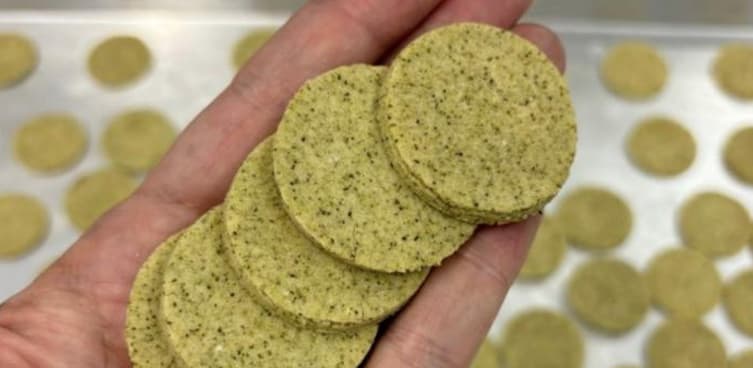
Incorporation of 1% SF (formulation F1) into gluten-free biscuits produced a statistically significant increase in ash content and moisture, alongside a reduction in carbohydrate content attributable to the partial displacement of starch-rich rice flour. Crucially, TPC rose from 21.80 mg GAE/100 g in the control (F0) to 68.93 mg GAE/100 g in F1, while ORAC values increased threefold from 33.47 to 102.21 μM TE/g prior to digestion. The authors say: “Only 1% of substitution produced a softness and brown biscuit with better digestibility of protein and antioxidant capacity.”
Hardness was reduced significantly – from 27.61 N in F0 to 18.47 N in F1 – attributed to the hygroscopic polysaccharides (alginates and fucoidans) in SF flour increasing water retention and reducing matrix compaction. Weight loss during baking was also lower in F1 (32.87% versus 35.44%), consistent with greater water-holding capacity. Physical expansion indices for diameter, thickness and volume showed no significant differences between formulations, confirming structural integrity was preserved.
Colour analysis revealed a marked darkening effect, with lightness (L*) falling from 79.42 in F0 to 60.32 in F1, and a shift towards yellow tones (b* increased from 24.60 to 29.94), attributable to seaweed pigments including fucoxanthin, chlorophylls and carotenoids. The total colour difference (ΔE = 55.42) substantially exceeded the threshold of 3 considered visually perceptible to consumers.
Antioxidant bioaccessibility increases during digestion
Simulated in vitro gastrointestinal digestion (INFOGEST 2.0 protocol) demonstrated a progressive and sustained increase in antioxidant activity across both formulations, with F1 consistently outperforming F0 at every digestive phase. By the intestinal phase, ORAC values reached 3,882.06 μM TE/g in F1 versus 2,489.25 μM TE/g in F0. TPC in F1 remained stable throughout digestion, indicating thermal and gastrointestinal stability of SF-derived phenolic compounds – notably phlorotannins and fucoxanthin. The authors note: “These findings highlight the potential of SF as a source of heat- and digestion-stable antioxidants, supporting its application in thermally processed functional foods.”
The estimated glycaemic index (eGI) was equivalent across formulations (approximately 62), suggesting that at 1% inclusion, SF did not meaningfully alter starch digestibility – a finding the authors attribute to the low substitution level being insufficient to alter the starch matrix structure.
Pathway to commercial application
Tagliapietra commented: “We’re in a transitional phase between research and practical application, but the results are very promising.” The authors identify several steps required before industrial-scale use, including standardisation of raw material supply, in-depth sensory evaluation with consumers, safety assessments – particularly regarding mineral and heavy metal composition – and regulatory compliance in accordance with Brazil’s ANVISA framework and, for European markets, the EU Novel Food Regulation (EU) 2015/2283.
Seasonal variability in SF composition was not evaluated in this study and is flagged as a priority for future investigation. The authors also call for higher inclusion level trials and in vivo studies to corroborate the in vitro findings. As they conclude: “S. filipendula emerges as a promising alternative… its application, even at low inclusion levels, may contribute to the development of value-added products aligned with health-focused and environmentally responsible food production.”
Journal reference:
Tagliapietra, B. L., Clerici, M. T. P. S., & Martínez-Villaluenga, C. (2026). Sargassum filipendula flour improves composition, digestibility, and antioxidant activity of gluten-free biscuits. Food Research International, 234, Article 118906.
https://doi.org/10.1016/j.foodres.2026.118906