Generative AI designs burgers that beat the Big Mac on taste, sustainability and nutrition
Stanford researchers have taught an AI system to design entirely new burger recipes from scratch – optimising simultaneously for great taste, environmental sustainability and nutritional quality. When the resulting burgers were served to real diners in a blinded restaurant trial, several matched or bettered the Big Mac. One mushroom-based recipe achieved an environmental impact score more than ten times lower than the fast-food benchmark.
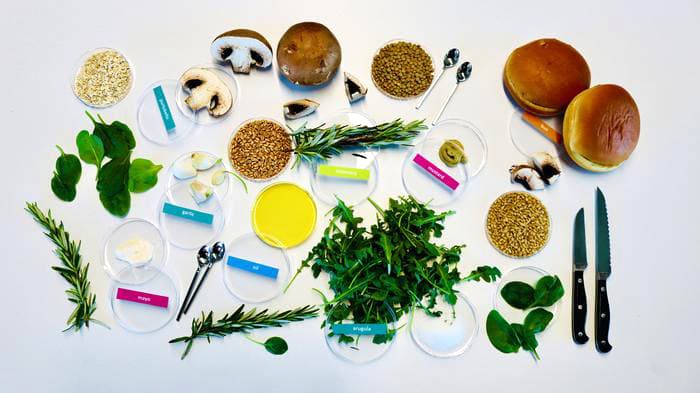
Developing a new food product can be extremely challenging. You have to balance taste against nutrition, sustainability against consumer acceptance, novelty against familiarity. It is a process that typically involves years of iterative reformulation, sensory panels and educated guesswork. A team from Stanford University believes there is a better way – and they have used burgers to prove it.
The researchers, led by postdoctoral fellow Vahidullah Tac and professor of mechanical engineering Ellen Kuhl, have built a generative AI system called BurgerAI that learns the underlying structure of human food preferences directly from recipe data, then uses that knowledge to design entirely new recipes optimised against multiple objectives at once. For food scientists and product developers, this is important as it represents a shift from artisanal trial-and-error toward what the authors describe as “a quantitative, data-driven design science.”
What the AI actually does
It helps to understand what “generative AI” means in this context, because it works quite differently from the large language models behind tools like ChatGPT. Rather than predicting the next word in a sentence, BurgerAI learns a statistical map of the entire burger design space – essentially, a mathematical picture of which ingredients tend to appear together, in what quantities, and how those combinations relate to palatability, nutrition and environmental impact.
The system was trained on 2,216 human-designed burger recipes drawn from Food.com, covering 146 possible ingredients. Each ingredient is either present or absent in a given recipe, which means the total number of possible ingredient combinations is 2 multiplied by itself 146 times – approximately 8.9×10⁴³ – a number so large it is quite beyond any systematic human exploration. The AI can navigate it intelligently.
The model works in two stages. First, it selects which ingredients to include. Then, separately, it determines how much of each ingredient to use. Both stages use a class of AI known as diffusion models – systems that learn by first progressively randomising existing data into noise, then learning to reverse that process to reconstruct realistic examples. Once trained, the model starts from random noise and works backwards to generate plausible, novel recipes. As Kuhl put it: “BurgerAI does not ask, ‘What burger is most likely?’ It asks, ‘What burger best satisfies these important and complex objectives?’”
Putting the burgers to the test
Generating recipes on a computer is one thing. Convincing real diners is another. The team prepared five AI-generated burgers following standardised protocols developed with an executive chef, then served them to 101 participants at a San Francisco restaurant in a fully blinded sensory evaluation. The Big Mac – chosen for its global familiarity and broad palatability – served as the reference benchmark.
Three of the AI-generated burgers outperformed the Big Mac in overall liking. The most novel recipe, Delicious Burger 2, scored significantly higher than the Big Mac for both overall liking and flavour (p<0.05). Importantly, the AI also rediscovered the Big Mac itself from statistical structure alone, without the reference recipe ever appearing in the training data – a result the authors describe as validating the model’s ability to capture collective human taste preferences.
Where it gets particularly interesting for food manufacturers
The sustainability findings are arguably the most striking for the industry. The fully mushroom-based Sustainable Burger 1 achieved an environmental impact score of just 0.06, compared to 0.93 for the Big Mac – a reduction of more than an order of magnitude – while still receiving broadly acceptable sensory scores. A mushroom-beef blend, Sustainable Burger 2, performed comparably to the Big Mac across all key sensory attributes whilst maintaining a comparable environmental footprint.
Crucially, the authors note that these gains did not come from simply swapping one ingredient for another. Instead, as they write, “sustainability emerges not from isolated ingredient substitutions, but from coordinated changes across entire recipes.” This is a significant finding for reformulation strategies, suggesting that system-level recipe redesign – rather than single-ingredient replacement – is where the real gains lie.
On the nutrition side, a bean-based formulation achieved a Healthy Eating Index score of 63.12, nearly twice the Big Mac’s 33.71, whilst simultaneously reducing environmental impact by a factor of six. The model also generated personalised recipes tailored to the specific nutritional requirements of different demographic profiles – a 15-year-old active male and a 70-year-old moderately active female – pointing toward practical applications in personalised nutrition.
Beyond burgers
Tac was candid about what surprised the team: “We expected some trade-off between sustainability and consumer acceptance. But we found a burger with dramatically lower environmental impact could still compete with one of the world’s most successful burgers.”
Kuhl noted: “Food was an easy motivator. With one arrow, you can hit two targets – planetary health and personal health.” The same mathematical framework, she argues, could be applied to pharmaceutical formulation, materials design and other complex multi-component systems where vast design spaces and competing objectives make systematic exploration impractical.
- The model, code and full dataset are publicly available at https://github.com/LivingMatterLab/AI4Food,
and the BurgerAI tool is accessible at https://ai4burgers.com.
Journal references:
Tac, V., Gardner, C. D., & Kuhl, E. (2026). Generative artificial intelligence creates delicious, sustainable, and nutritious burgers. npj Science of Food, 10, 199. https://doi.org/10.1038/s41538-026-00953-x
Tac, V., & Kuhl, E. (2026). Generative AI for material design: A mechanics perspective from burgers to matter. Computer Methods in Applied Mechanics and Engineering, 461, 119171. https://doi.org/10.1016/j.cma.2026.119171