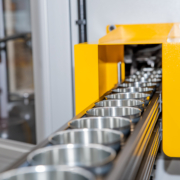
Hoffmann, a global provider of high-quality packaging for infant-food, nutritional and wellbeing products, has upgraded its manufacturing facility in The Netherlands to include a dedicated tins production line for baby milk powder products. Now installed and operating in a segregated room for food-grade compliance, the new line is currently servicing a major customer in the […]
https://fei-online.com/wp-content/uploads/sites/4/2022/03/Hoffmann.jpg12021800panglobalhttps://fei-online.com/wp-content/uploads/sites/4/2020/06/fei-online-logo.pngpanglobal2022-03-28 11:13:282022-03-28 11:14:01Hoffmann upgrades facility in The Netherlands with dedicated line for baby milk powder tins
Following JECFA (Joint FAO/WHO Expert Committee on Food Additives) approval, the Codex Alimentarius (Codex) has adopted the processes of bioconversion and fermentation used for the production of Reb M into its guidelines. This addition enables PureCircle by Ingredion to sell Reb M and a range of proprietary blends from its bioconversion process as well as […]
https://fei-online.com/wp-content/uploads/sites/4/2022/03/Stevia-leaf-bowl.jpg11251000panglobalhttps://fei-online.com/wp-content/uploads/sites/4/2020/06/fei-online-logo.pngpanglobal2022-03-28 11:10:572022-03-28 11:10:57Codex Alimentarius adopts processes of bioconversion, fermentation for production of Reb M into its guidelines
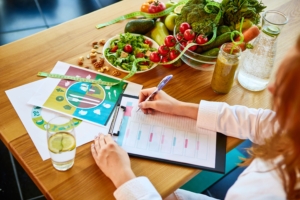
A study [i] published recentlty in Frontiers of Nutrition conducted by Perfood, Germany, in collaboration with the University of Lübeck, Germany, demonstrates that BENEO ingredients support a personalised nutrition approach. BENEO’s first citizen science study conducted under real-life conditions further confirms the health benefits of BENEO’s slow-release carbohydrate Palatinose™ and the prebiotic fibre Orafti®Synergy1 [ii]. The results show that both ingredients improve blood glucose control and that the latter also beneficially modulates gut microbiota through a significant increase in beneficial bifidobacteria.
This is the first study of its kind to investigate the effects of a BENEO diet combining Palatinose™ and Orafti Synergy1 in healthy adults in a real-life situation using the citizen science approach. Instead of controlled conditions where all participants eat and drink in a strict and well-controlled manner during the trial, participants in this study consumed BENEO’s ingredients in addition to their normal diet. The effects observed were robust even in such a very heterogenous population and not overruled by the habitual diet and usual lifestyle.
Palatinose (isomaltulose) is the only fully digestible and slow-release carbohydrate (disaccharide), providing standard carbohydrate energy (4 kcal/g) and a low glycaemic response (GI32).
Orafti Synergy1 (oligofructose-enriched inulin) is a unique composition of inulin and oligofructose. It is a dietary fibre and at the same time a scientifically proven prebiotic, confirmed by International Scientific Association for Pro- and Prebiotics (ISAPP). Chicory root fibres are not digested by human enzymes and are thereby unavailable for glucose release into the blood stream meaning their consumption does not raise blood glucose levels. In the colon they are fully and selectively fermented by beneficial bacteria. As proven prebiotics, their intake is associated with several health benefits.
Two dietary interventions
Two dietary interventions were included in the study, targeting the support of blood glucose management, as well as the gut microbiota by increasing the beneficial bacteria (Bifidobacteria). The participants took part in a test phase over 14 days during which, in addition to the habitual diets, over three days they consumed drinks with either 30 g sucrose or 30 g Palatinose twice a day (for breakfast and lunch together with the habitual meal). Orafti Synergy1 (10g/d) was added to their usual dinner for 11 days. Continuous blood glucose monitoring (CGM) was applied to evaluate the blood glucose response throughout, with stool samples collected at the beginning and end of the test phase and analysed using a gut microbiome RNA sequencing technique to measure the compositional changes of the gut microbiota.
The findings highlight the added value of BENEO’s ingredients for everyday life through various applications. When added to the individual diet, beneficial effects that were previously shown in controlled clinical studies could also be demonstrated in an habitual diet situation. In comparison to sucrose, Palatinose showed a lower blood glucose response, a lower and more balanced blood glucose profile for the day, plus a slow release and sustained glucose supply. The positive effects of Orafti Synergy1 supplementation were also demonstrated in this real-life situation through a significant increase in beneficial bifidobacteria and a significant decrease in glycaemic variability over time. The decrease in glycaemic variability over time was irrespective of the carbohydrate consumed and therefore is a beneficial effect that can be regarded as synergistic to the Palatinose related effects on blood glucose management. These latest findings demonstrate that the combination of Palatinose and Orafti Synergy1, independently of each other, supports blood glucose management for improved metabolic health. Therefore, incorporating these functional ingredients as part of a healthy diet can improve the diet quality, also in the context of personalised nutrition, and contribute to overall better health.
Real life
Anke Sentko, Vice President Regulatory Affairs & Nutrition Communication at BENEO comments: “For the first time, the health benefits of our ingredients that have already been proven in numerous clinical studies under controlled circumstances, are now confirmed in complex real-life situations. These recent study results show that food choices matter and demonstrate how functional ingredients can help to support health. The study design also demonstrates that both BENEO’s Palatinose and Orafti Synergy1 deliver health benefits in the context of personalised nutrition by addressing individual dietary needs, a diet approach that is appreciated by more and more consumers when it comes to topics such as weight management and ensuring a healthy body and mind.
“Furthermore, the demonstration of the synergetic effect of the two ingredients related to the decrease in glycaemic variability over time was particularly exciting for us: it finally confirms that microbiota composition and blood sugar management are closely interrelated. Therefore BENEO’s functional ingredients Palatinose and Orafti Synergy1 offer a holistic approach.”
References
i. Kordowski A, Künstner A, Schweitzer L, et. al. (2022) PalatinoseTM (Isomaltulose) and Prebiotic Inulin-Type Fructans Have Beneficial Effects on Glycemic Response and Gut Microbiota Composition in Healthy Volunteers – A Real-Life, Retrospective Study of a Cohort That Participated in a Digital Nutrition Program. Frontiers in Nutrition 9 (7 March 2022). doi: https://doi.org10.3389/fnut.2022.829933
ii. Orafti®Synergy1 is an oligofructose‐inulin combination containing shorter chain inulin (oligofructose DP < 10) and longer chain inulin (inulin DP ≥ 10) in an approximate 50:50 ratio ± 10% each. Beneo‐Orafti, Tienen, Belgium
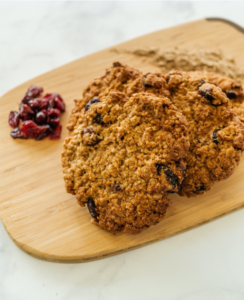
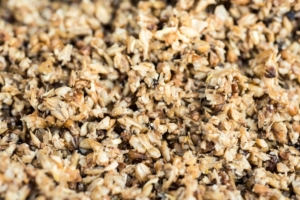
Puratos and ReGrained have established a partnership to provide upcycled solutions for the commercial baking industry through an exclusive collaboration and supply agreement. With their complimentary areas of expertise, ReGrained and Puratos are well-positioned to offer ‘sustainable’ solutions that are increasingly in demand in the food industry.
ReGrained’s Upcycled Food Lab is a leading innovation platform for upcycled product development. ReGrained SuperGrain+, its first certified upcycled ingredient derived from brewer’s spent grain, delivers a minimum of 3.5-times the dietary fibre and 2-times the plant protein of whole grain flours while lowering net carbs. The international group Puratos brings an unparalleled depth of global expertise in natural fermentation, health and wellbeing, enzyme-based technologies, and consumer insights. Together, they share a customer-centric and agile approach for creating scalable and highly marketable baked goods.
Regrained’s SuperGrain+
Bakery is big business in the United States. The industry exceeded $55 billion in 2020 and is projected to grow at a CAGR of 4.8% by 2027. Consumer tastes and expectations for baked goods are rapidly shifting to more healthy, low-carb and high-fibre options in convenient formats. Concurrently, 42% of consumers report an increased awareness of the environmental impact their food choices represent, while consumer consciousness of the positive impact food waste mitigation has on the climate crisis has grown 71% since 2019.
“This partnership offers powerful tools for the commercial baking industry to unlock the upcycled food opportunity at scale,” said Dan Kurzrock, Founder & CEO of ReGrained. “Together we can bring clean, elevated nutrition, superb flavour and real sustainability to some of human civilization’s most time-honored food traditions.”
Michael Gleason, Product Manager of Bakery for Puratos USA, said: “Puratos aims to be the most reliable partner in innovation for the baked goods and chocolate market, which is why we invest so heavily in research and development. We’re committed to helping the next generation create a better and healthier world for all. ReGrained’s leadership in upcycled food innovation is a great fit with our strategic mission.”
https://fei-online.com/wp-content/uploads/sites/4/2022/03/Breakfast-cookie.png633514panglobalhttps://fei-online.com/wp-content/uploads/sites/4/2020/06/fei-online-logo.pngpanglobal2022-03-18 11:04:052022-03-18 11:04:05Puratos and ReGrained collaborate to provide upcycled solutions for the bakery industry
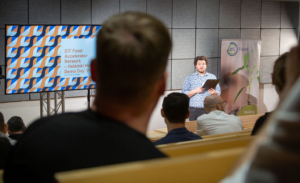
The VTT-led FAN Helsinki Hub organises a completely free-of-charge acceleration programme for agritech and foodtech startups solving global food system challenges. Applications can be submitted until the end of February. Ten innovative startups will be selected for the four-month programme and they will receive individual mentoring from academic and commercial programme partners. To date, the FAN Helsinki acceleration programme alumni have raised over €40 million in funds.
EIT Food is Europe’s largest agrifood startup community bringing together entrepreneurs with one goal: solving the global food system challenges through science and technology-based innovations. The EIT Food Accelerator Network’s (FAN) seven hubs provide acceleration programmes to support science and breakthrough of technology-driven startups. The startups are guided by local mentors and partner organisations. They will also have access to a global partner network, including over 40 companies such as Danone, Pepsico, John Deere, Döhler and Zoetis.
In the past two years, the EIT FAN Helsinki hub has supported the growth of 20 selected agrifood startups. The Helsinki hub is led by VTT Technical Research Centre of Finland, and the University of Helsinki continues as its main partner. One of the programme’s main goals is to help the startups raise funds – to date, the FAN Helsinki acceleration programme alumni have raised over €40 million in funds.
“We are now on the lookout for applications by innovative agrifood startups with a focus on sustainable agriculture or digital traceability. We accept applications from all pre-seed stage startups across Europe. As the FAN Helsinki Hub is in the geographical proximity of the Baltics and Poland, we would love to welcome teams also from that area this year. Previously we have selected teams from Finland, Sweden, Belgium, and Austria,” says VTT’s Co-Creation Manager and EIT FAN Helsinki Hub leader Mirva Lampinen.
The application period for Helsinki hub’s third acceleration programme runs until the end of February. A panel of impartial experts will select ten teams for the four-month programme starting in June.
The EIT FAN acceleration programmes provide startups with a unique opportunity to receive high-quality mentoring without future commitment or fees. Last year, one of the FAN Helsinki acceleration programme’s participants, Volare, found themselves quickly at the same table with the programme’s corporate partner, the Paulig Group.
“We started facilitated discussions with the Paulig Group during the programme, and the discussions led to a collaboration. We now have inspiring plans for the future together. The EIT FAN Helsinki programme provided us with many tools, sparring, and connections that have enabled us to achieve so much in such a short time,” says Volare’s COO, Jarna Hyvönen.
Alumni success stories paint an encouraging picture for future programmes
The FAN Helsinki acceleration programme has received excellent feedback from the participating startup teams.
“Since completing our EIT FAN participation in the autumn of 2020, things have been progressing exponentially at Mycorena. Most notably, we closed a €7.7 million funding round in June of the following year, a process that was greatly helped by the insights on fundraising and due diligence processes from the programme and its fantastic mentors. Without EIT FAN, we would not be where we are today,” says Helsinki programme alumnus Anton Johansson, CFO at Mycorena.
Last year, the FAN Helsinki Hub received over 80 applications from 21 countries, which made it possible to select a high-quality set of teams for the programme. The Helsinki Hub has facilitated over 40 matchmaking sessions and run 7 EIT funded pilots during the past two programmes. This year, the target is to increase the number of pilot projects.
EIT FAN provides agrifood startups with great collaboration opportunities
The EIT FAN grew by another regional hub last November when the French hub was opened in Paris. The network also gained a new global partner from the international food markets, International Flavors and Fragrances IFF. The EIT FAN core partners provide unique collaboration opportunities to all startups in the programme.
The EIT FAN Helsinki hub consists of a vast network of local experts and mentors with both commercial and academic backgrounds as well as the programme’s local corporate partners. The 2022 programme will start on June 8th.
This year the Helsinki Hub welcomes a new corporate partner to the acceleration programme, Lantmännen Group.
“Lantmännen is excited to join EIT FAN Helsinki Hub. We strongly believe that, in the future, breakthrough innovations and disruptions require collaboration between different players in the agrifood ecosystem. Therefore, we look forward to exploring opportunities together with the startups but also providing them with support and contacts,” says Nina Tuomikangas, Project Manager Innovation at Lantmännen Group R&D.
https://fei-online.com/wp-content/uploads/sites/4/2022/02/foodtech-startup.jpg8661418panglobalhttps://fei-online.com/wp-content/uploads/sites/4/2020/06/fei-online-logo.pngpanglobal2022-02-15 10:55:012022-02-15 10:55:01Startups invited to VTT and EIT FAN third agritech and foodtech accelerator
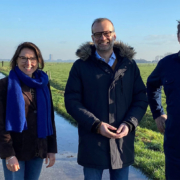
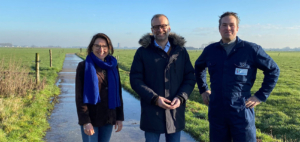
Simone Boitelle, Director Global Corporate Affairs FrieslandCampina (left), Yann-Gaël Rio, Danone’s Global Vice-President for Nature & Agriculture (centre) and member dairy farmer Edwin Daatselaar (right)
A three year collaboration between FrieslandCampina and Danone has led to more than 17% reduction in greenhouse gas (GHG) emissions (measured from 2015 to 2020). This reduction has been realised through FrieslandCampina’s dairy farmers implementing sustainable farming practices and green energy projects. This is applied for dairy ingredients specifically provided to Danone. FrieslandCampina used the Annual Nutrient Cycling Assessment to track progress resulting from the sustainable farming practices. This extensive monitoring tool is used by almost 10,000 FrieslandCampina member dairy farms and gives farm specific insights, such as the size of their carbon footprint.
Committed to making our food system more sustainable, FrieslandCampina and Danone are both running extensive sustainability programmes to reduce their environmental impact. Both companies have committed to reaching net zero, as one of their climate goals, as well as improving soil health and biodiversity. One of the ways to achieve these goals is through regenerative agriculture practices. FrieslandCampina and Danone both want to support farmers on the journey towards a sustainable future, which led to this partnership.
Net zero and nature-positive
Simone Boitelle, Director Global Corporate Affairs FrieslandCampina noted: “For over 150 years already, FrieslandCampina believes in cooperation to achieve great results. And this collaboration is yet another great example. Supporting farmers to produce milk in balance with nature, is the key to a more sustainable, climate neutral and nature positive future. I am very proud of our member farmers who make this possible, they deserve the stage for these strong results!”
Yann-Gaël Rio, Danone’s Global Vice-President for Nature & Agriculture, added: “Sustainable dairy farming is a key priority in Danone’s journey to achieving net zero emissions. This partnership demonstrates that by combining our expertise, we can accelerate the adoption of regenerative agriculture practices to help reduce the climate impact of dairy farming. While this is a great step, there is more to be done, and we are looking forward to supporting more farmers in their transition by extending this partnership for an additional three years.”
What did the FrieslandCampina dairy farmers do?
Depending on the nature of their farm, dairy farmers can take different measures to reduce their greenhouse gas emissions. The impacts from the measures implemented were tracked through the Annual Nutrient Cycling Assessment. Some examples of the measures taken are:
More protein harvested from their own farm land, further reducing the impact from sourcing feed from far away;
Optimising the cow’s diet composition: keeping a well-balanced nutritious diet that supports animal health and welfare, while reducing enteric methane emissions;
Energy measures: generating green electricity through use of solar panels, windmills and manure digesters; avoiding fossil fuels through bio-based diesel and/or reducing energy use (for example by recovering heat from milk cooling). In addition the manure digesters not only generate renewable electricity but also help to reduce methane emissions through manure storage.
What’s next for regenerative farming?
The positive results from this partnership encouraged Danone and FrieslandCampina to extend the collaboration for an additional three years. The two companies will continue their efforts together with the goal to reduce GHG emissions resulting from the production of ingredients sourced from FrieslandCampina by over 7%. This would result in almost a 25% GHG emission reduction over the course of the multi-year collaboration.
In the coming years, FrieslandCampina and Danone say they will continue their joint efforts to create innovative solutions to scale up and accelerate the transition to regenerative farming.
https://fei-online.com/wp-content/uploads/sites/4/2022/02/friesland.jpg8061701panglobalhttps://fei-online.com/wp-content/uploads/sites/4/2020/06/fei-online-logo.pngpanglobal2022-02-04 10:37:192022-02-04 10:37:19FrieslandCampina-Danone collaboration leads to 17% greenhouse gas reduction
Danish biotech company Biosyntia and the Munich-based WACKER Group will form a partnership to develop a large-scale production process for fermentation-based biotin. The aim of the collaboration is to make fermentation-based biotin available for the market as a sustainable, non-chemical, European-sourced alternative. The biotin currently available on the market is synthetically produced from non-renewable petrochemicals.
Biotin, also known as vitamin B7, is a coenzyme for the metabolism of proteins, fats and carbohydrates. The European Food Safety Authority (EFSA) attributes health-promoting effects to biotin, including, for example, that it contributes to normal functioning of the nervous system and macronutrient metabolisms as well as to the maintenance of normal skin and hair.
Demand for biotin, which is also used as a dietary supplement, is rising sharply – driven by the health and well-being trend. A recent study predicts growth of around 10 percent per year in the coming years. In 2026, the global biotin market is expected to reach a volume of US$376 million.
Sustainable fermentation, the future of production
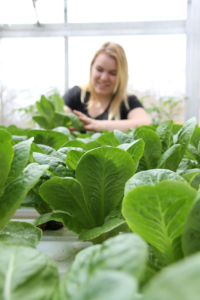
WACKER and Biosyntia will jointly develop a large-scale biotin production process based on sustainable fermentation. The companies are dedicating considerable R&D resources in a multi-year program, which will build on Biosyntia’s world-leading biotin technology. Only plant-based raw materials will be used in the fermentative production.
“Demand for more natural products is increasing – and with it the need for companies to use ingredients that are sustainable. Producing active ingredients from advanced fermentation is the future of production,” explained Martin Plambech, CEO of Biosyntia.
Biotin has a wide range of applications in food & beverages, infant nutrition, nutraceuticals, pet food, animal feed, pharmaceuticals and cosmetics.
“With fermentation-based biotin, we want to offer customers a non-chemical, sustainable alternative that is produced in Europe,” said Susanne Leonhartsberger, President of WACKER Biosolutions, WACKER’s life science division.
Biosynthia-WACKER synergy
Biosyntia is considered a global leader in the development of fermentation processes for production of selected small molecules. The Danish biotech company has a proprietary microbial technology platform, on which it is building a rapidly growing pipeline of active ingredients for the beauty and nutrition industries. WACKER brings strong expertise in biotechnological process development and industrial-scale fermentation to the partnership. The company also has a deep understanding of requirements and regulations of the food and nutraceutical industry. WACKER offers a broad portfolio here, including fermentation-based L-cysteine and solutions for formulating effective dietary supplements.
https://fei-online.com/wp-content/uploads/sites/4/2022/02/wacker_biosynthia_3.jpg8001000panglobalhttps://fei-online.com/wp-content/uploads/sites/4/2020/06/fei-online-logo.pngpanglobal2022-02-03 11:25:242022-02-03 11:25:24WACKER and Biosyntia to develop large-scale production process for sustainable biotin
Two thirds of consumers living in the UK, Denmark, Sweden and Germany do not see nutrition as part of a sustainable diet, which could lead to them becoming ‘nutrition blind’ and have unintended consequences for their health. These are the findings of a recent survey of more than 8,000 consumers in these countries conducted by YouGov on behalf of Arla Foods, a Danish multinational cooperative and Scandinavia’s largest producer of dairy products.
While most consumers in the four countries say that they try to make sustainable choices wherever they can, their focus is mostly on carbon footprint, biodiversity, packaging and animal welfare. The nutritional value of the food product is to a much lesser extent being considered when choosing a sustainable diet. Only one in three (34%) consumers say that they associate nutrition with sustainable diets.
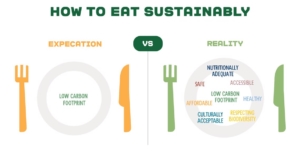
Sustainable diets, as defined by the Food and Agriculture Organisation of the United Nations, consist of multiple essential components which include the environmental impact but also the nutritional value of the diet.
Professor Judy Buttriss, public health nutritionist and former Director General of the British Nutrition Foundation from 2007 to 2021 commented on the survey results: “It’s great that we continue to grow our awareness of how food production and our diets affect the climate and nature. However, this research shows that many people tend to overlook the other determinants of sustainable diets, especially nutrition, which has always been the fundamental purpose of food and an essential factor for our long-term physical and mental well-being. Becoming ‘nutrition blind’ can have unintended consequences for our health and we need to bring nutrition back into the conversation about sustainable diets.”
Hidden hunger
With more than half of the European population overweight and every sixth person obese according to the World Health Organization (WHO), overnutrition is by far the most serious nutrition-related health issue in Europe. However, there is also a third and more hidden problem in both developing and developed countries, which is often seen in combination with obesity: low intakes of micronutrients (vitamins and minerals).
Lea Brader, Nutrition Scientist, Arla Foods, explained: “People at risk of micronutrient deficiency might not realise it. If your diet is poor, you can still get your energy from the macronutrients such as carbohydrate and fat. However, you don’t necessarily get sufficient amounts of micronutrients such as iron, zinc, calcium, iodine, vitamin A, B-vitamins, and vitamin C. This is why micronutrient deficiency is also called ‘hidden hunger’.”
WHO has estimated that more than two billion people globally suffer from ‘hidden hunger’ and that 20% of these are Europeans. In the UK, the National Diet and Nutrition Survey has documented a general decline in intake of some vitamins and minerals over the period from 2008 to 2017, particularly in adolescents. For example, the survey shows that approximately every fifth teenage girl and around every seventh teenage boy in the UK has a low intake of calcium, vitamin B2 and iodine.
Dietary guidelines
Encouragingly, Arla’s survey shows a clear desire among Northern European consumers to find out more information about how to make their diets more sustainable. However, half (49%) of them feel confused about how to eat sustainably and 52% state that they would like more information.
Brader said: “With tonnes of information in the public domain that may or may not be scientifically validated, it can certainly be difficult to decide on what to eat to stay healthy and live sustainably. A good place to start is to follow your national dietary guidelines.”
Official dietary guidelines promote diets that are nutritious, accessible, affordable and culturally acceptable. More and more countries have started to also include consideration of the climate impact of the food as well as food waste issues.
Key results of the survey
The survey was conducted by YouGov of 8,212 consumers in the UK, Denmark, Sweden and Germany from 20-24 September 2021.
Only 34% associate nutrition with sustainable diets – 66% do not consider it a feature of sustainable diets.
The majority associate environmentally friendly (58%) and locally produced (52%) to be features of sustainable diets
63% say they try to make sustainable food choices whenever they can
49% feel confused about how to eat sustainably
52% would like more information about how to choose a sustainable diet
FAO’s definition of sustainable diets
‘Sustainable Diets are those diets with low environmental impacts which contribute to food and nutrition security and to healthy life for present and future generations. Sustainable diets are protective and respectful of biodiversity and ecosystems, culturally acceptable, accessible, economically fair and affordable; nutritionally adequate, safe and healthy while optimizing natural and human resources.’ https://www.un.org/en/academic-impact/shifting-sustainable-diets
https://fei-online.com/wp-content/uploads/sites/4/2022/01/sustainable_food.jpg17011134panglobalhttps://fei-online.com/wp-content/uploads/sites/4/2020/06/fei-online-logo.pngpanglobal2022-01-25 11:20:202022-01-25 11:20:20Most consumers in UK, Denmark, Sweden and Germany do not see nutrition as part of sustainable diets – Arla Foods survey
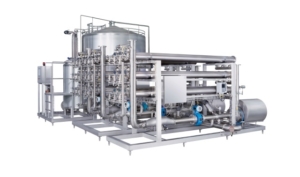
Alfa Laval, a world leader in heat transfer, centrifugal separation and fluid handling, will supply membrane filtration systems to a food facility in Denmark for the production of healthy dietary fibre from crop leftovers. The company’s membranes will be used to extract fibres from sources such as brewers’ grains, corn stover and wheat straw, improving the circularity of the food chain.
The Alfa Laval membrane filtration systems will be used to recover and purify crop leftovers, mainly supplied from local farmers, and process it into prebiotic dietary fibre. These prebiotic fibres are not digestible by the human body but help ensure healthy bacteria growth in the stomach.
“This is an interesting order in a new and promising application for our membrane systems improving the circularity of the food chain,” says Nish Patel, President of the Food & Water Division at Alfa Laval “Our efficient membranes will be able to extract valuable fibres and thereby turn former waste into sellable ingredients, which will benefit our customers and the environment.”
https://fei-online.com/wp-content/uploads/sites/4/2022/01/alfa_laval.jpg378640panglobalhttps://fei-online.com/wp-content/uploads/sites/4/2020/06/fei-online-logo.pngpanglobal2022-01-25 11:11:222022-01-25 11:11:22Alfa Laval membrane filtration systems to turn crop leftovers into prebiotic dietary fibre for a Danish food facility
The Barry Callebaut Group, a Switzerland-based cocoa processor and chocolate manufacturer, has for the first time made the CDP’s prestigious A List as a leader in corporate action and transparency on deforestation. This comes the company ranked for four years in a row as a CDP global climate leader with a score of A- for their climate reduction efforts.
Barry Callebaut is one of 24 high-performing companies, securing a place on CDP’s prestigious ‘A List’, out of nearly 12,000 companies scored by CDP in 2021.
CDP’s annual environmental disclosure and scoring process is widely recognized as the gold standard of corporate environmental transparency. In 2021, over 590 investors with over US$110 trillion in assets and 200 major purchasers with US$5.5 trillion in procurement spend requested companies to disclose data on environmental impacts, risks and opportunities through CDP’s platform.
A detailed and independent methodology is used by CDP to assess companies, allocating a score on the comprehensiveness of disclosure, awareness and management of environmental risks and demonstration of best practices associated with environmental leadership, such as setting ambitious and meaningful targets.
“This is our fourth consecutive year of being recognized as a leader by CDP, which shows tremendous appreciation of our Forever Chocolate progress to make sustainable chocolate the norm by 2025. It is an enormous challenge, but the recognition by CDP is testimony to the dedication of our people, every day, to continue to innovate, scale and remain focussed on our sustainability efforts,” commented Pablo Perversi, Chief Innovation, Sustainability & Quality Officer; Global Head of Gourmet, Barry Callebaut Group.
Paul Simpson, CEO of CDP, commented: “Many congratulations to all the companies on this year’s A List. Taking the lead on environmental transparency and action is one of the most important steps businesses can make, even more so in the year of COP26 and the IPCC’s Sixth Assessment Report. The scale of the risk to businesses from climate change, water insecurity and deforestation can no longer be ignored, and we know the opportunities of action far outweigh the risks of inaction. Leadership from the private sector is essential for securing global ambitions for a net-zero, nature positive and equitable world. Our A List celebrates those companies who are preparing themselves to excel in the economy of the future by taking action today.”
Carbon reduction and identifying forests with high conservation value
The Barry Callebaut Group says that by 2025, their goal is to be carbon and forest positive. Their journey to reach this ambition began in 2016 with the launch of Forever Chocolate, their plan to make sustainable chocolate the norm.
One milestone on their road to reduce deforestation in 2021, was the development, after four years of work with EcoVision Lab, part of ETH Zurich (Swiss Federal Institute of Technology in Zurich, Switzerland) of a publicly available, industry-first, indicative High Carbon Stock (HCS) map, that identifies forests with high conservation value and areas where deforestation would cause the highest carbon emissions. This new innovative tool provides a highly automated, transparent, objective tool that generates HCS maps at global scale.
To become carbon positive Barry Callebaut have committed to assessing the carbon impact created by their own operations (scope 1), the impact generated by the energy they use (scope 2), and the impact of their entire supply chain (scope 3), which includes the production and processing of all the raw materials they source, and related Land Use Changes (LUC), which forms the biggest part of their carbon liability.
To illustrate, Barry Callebaut notes: “The use of animal feed additives is widely recognized as an effective means of reducing methane emissions in dairy cattle. To establish the most effective method to reduce our emissions, we worked in collaboration with Gold Standard and Agolin to develop a new methodology to quantify and certify carbon insetting for dairy within our chocolate supply chain. By developing this methodology we can also work more closely with our dairy suppliers to produce low carbon milk.”
https://fei-online.com/wp-content/uploads/sites/4/2022/01/CDP-Forests-stamp.jpg969960panglobalhttps://fei-online.com/wp-content/uploads/sites/4/2020/06/fei-online-logo.pngpanglobal2022-01-25 11:06:412022-01-25 11:06:41Barry Callebaut makes CDP’s prestigious A List as a leader in corporate action and transparency on deforestation
We may ask you to place cookies on your device. We use cookies to let us know when you visit our websites, how you interact with us, to enrich your user experience and to customise your relationship with our website.
Click on the different sections for more information. You can also change some of your preferences. Please note that blocking some types of cookies may affect your experience on our websites and the services we can provide.
Essential Website Cookies
These cookies are strictly necessary to provide you with services available through our website and to use some of its features.
Because these cookies are strictly necessary to provide the website, refusing them will affect the functioning of our site. You can always block or delete cookies by changing your browser settings and block all cookies on this website forcibly. But this will always ask you to accept/refuse cookies when you visit our site again.
We fully respect if you want to refuse cookies, but to avoid asking you each time again to kindly allow us to store a cookie for that purpose. You are always free to unsubscribe or other cookies to get a better experience. If you refuse cookies, we will delete all cookies set in our domain.
We provide you with a list of cookies stored on your computer in our domain, so that you can check what we have stored. For security reasons, we cannot display or modify cookies from other domains. You can check these in your browser's security settings.
.
Google Analytics Cookies
These cookies collect information that is used in aggregate form to help us understand how our website is used or how effective our marketing campaigns are, or to help us customise our website and application for you to improve your experience.
If you do not want us to track your visit to our site, you can disable this in your browser here:
.
Other external services
We also use various external services such as Google Webfonts, Google Maps and external video providers. Since these providers may collect personal data such as your IP address, you can block them here. Please note that this may significantly reduce the functionality and appearance of our site. Changes will only be effective once you reload the page
Google Webfont Settings:
Google Maps Settings:
Google reCaptcha settings:
Vimeo and Youtube videos embedding:
.
Privacy Beleid
U kunt meer lezen over onze cookies en privacy-instellingen op onze Privacybeleid-pagina.