Agilent Technologies has announced the availability of an optimized and verified eMethod for PFAS Analysis in Water by LC/ TQ for testing per- and polyfluoroalkyl substances (PFAS) in drinking and surface water using liquid chromatography and mass spectrometry.
https://fei-online.com/wp-content/uploads/sites/4/2021/11/water-bottle.png19201585panglobalhttps://fei-online.com/wp-content/uploads/sites/4/2020/06/fei-online-logo.pngpanglobal2021-11-03 12:01:322021-11-03 12:01:32Agilent announces optimized and verified method for testing more than 100 PFAS compounds
Eighteen months after creating the world’s first cell cultured human milk, 108Labs is now focused on accelerating the field from lab to factory by building and programming the world’s first autonomous ‘Cellufacturing’ facility and artificial intelligence platform for production of cell cultured human milk in the birthplace of biosynthetic human milk, Hillsborough, North Carolina.
https://fei-online.com/wp-content/uploads/sites/4/2021/11/108Labs-milk.jpg15122016panglobalhttps://fei-online.com/wp-content/uploads/sites/4/2020/06/fei-online-logo.pngpanglobal2021-11-03 11:59:042021-11-03 11:59:04108Labs is building world’s first cell-cultured human milk factory
This year’s Recent Advances in Food (RAFA 2021) event will be held virtually on 3-4 November.
The event organizers, University of Chemistry and Technology, Prague (UCT Prague, Czech Republic) and Wageningen Food Safety Research (WFSR), part of Wageningen University & Research (The Netherlands), said due to ongoing uncertainty with the COVID-19 pandemic, it has been decided not to hold a live RAFA symposium.
“To keep the RAFA community together and invite newcomers to join us, we are organizing an online special event titled ‘RAFA Trends & Views’. Attending this event will be free of charge for all registered participants,” the organizers said.
“We are delighted to invite food scientists from academia and industry, representatives of national and international agencies, control authorities, governmental and commercial laboratories to attend RAFA 2021.”
Since the first edition launched in 2003, RAFA has grown to become a prestigious event attended by up to 900 participants from more than 60 countries worldwide.
RAFA 2021 programme highlights
In line with previous events, the RAFA 2021 symposium will provide an insight into contemporary trends in (BIO)ANALYTICAL STRATEGIES IN FOOD QUALITY AND SAFETY CONTROL and discuss CHALLENGES / NOVEL APPROACHES IN FOOD AND NATURAL PRODUCT ANALYSIS. The oral programme will be accompanied by a series of webinars offered by leading companies. These webinars will introduce participants to recent instrumentation and analytical strategies for advanced food quality, safety and authenticity control.
The programme will be composed of invited lectures presented by distinguished speakers who will open discussion on current trends and their visions. In addition, various satellite events, such as vendor webinars or focused workshops and seminars, will be also offered to participants. Networking and virtual meetings will be supported to enable sharing of views on presented topics.
Due to a limited format of this year RAFA, no proposals for oral and/or poster presentations can be accepted.
RAFA 2022 – the 10th anniversary of the event – will be organised as a live event in Prague, in November 2022.
For more information on RAFA 2021, and to register, visit: rafa2021.eu
Food systems are interconnected with regards to global challenges such as hunger, climate change, poverty, and inequality. The response from food systems actors globally must be equally connected. This is the message in an article published in the Lancet online, where leaders from the Johns Hopkins University, the Global Alliance for Improved Nutrition (GAIN), and the Food and Agriculture Organization of the United Nations (FAO), have joined forces in expressing a strong call to action for food and health communities to work together.
Jessica Fanzo, Director, Johns Hopkins Global Food Ethics and Policy Program says: “It is imperative that our health sectors and health partners join us in transforming the food systems for those that are undernourished, particularly older, vulnerable and marginalized people.” She continues: “To have a healthy planet, we need everyone to have a healthy diet.”
Talking about how health systems and food systems are interconnected, Lawrence Haddad, Executive Director of GAIN and 2018 World Food Prize Laureate, says: “We already know that good nutrition is the foundation for a healthy life, which in turn leads to healthy and thriving communities. By working together and combining our knowledge there is a real opportunity now to support the transformation of food systems, securing healthy and nutritious diets for all.”
José Rosero Moncayo, Director of FAO Statistics Division, FAO says: “Without the actors in global health we cannot achieve healthy diets on our plates and nor can we achieve sustainable agricultural practices.” He adds: “It is crucial that we work together with health system actors in shaping healthy communities.”
With the UN Food Systems Summit starting on 23 September, the joint statement points to a real opportunity to advance cooperation between the global health sectors and stakeholders and increase research and innovation for safe, nutritious, affordable, and accessible food for all.
As stated in the Lancet article: “An interconnected systems approach with equity and human rights at the core is essential to achieve health, food, and environmental goals simultaneously. The health community has a vested stake in this approach, and what happens during and after the Summit.”
Haddad adds: “Transforming food systems requires all hands on deck from all the stakeholders to achieve both safe, nutritious and healthy food for all. The Food Systems Summit and its related events such as the ‘Youth is the Future’ event and ‘Zero Hunger Private Sector Pledge’ are key to achieving this.”
https://fei-online.com/wp-content/uploads/sites/4/2021/09/vegetables-1085063_1920.jpg12681920panglobalhttps://fei-online.com/wp-content/uploads/sites/4/2020/06/fei-online-logo.pngpanglobal2021-09-13 10:54:252021-09-13 10:54:25Call for a united front as global health takes a stake in the UN Food Systems Summit
Leveraging augmented reality to offer enhanced digital support, globally
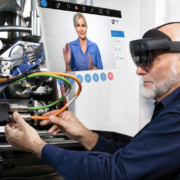
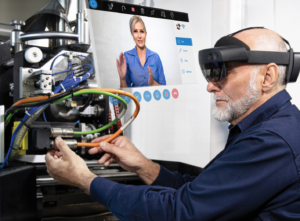
A tna engineer providies technical support using the tna remote assist service.
Global food processing and packaging technology specialist, tna, has launched its new tna remote assist service: a digitally enhanced customer experience, delivering greater efficiencies in commissioning, support and training, with real-time access to tna’s global team of experts.
Harnessing the power of the Microsoft HoloLens 2 headset, the tna remote assist service enables real-time access to connect and collaborate with tna engineers virtually and leverages AR (augmented reality) to accurately address technical queries. Offering remote access for commissioning, troubleshooting, training and support, the innovative new service takes service provision to the next level, giving food manufacturers the tailored support they need to keep lines operating smoothly, wherever they are in the world.
The new digital service has been developed as part of tna’s endeavours to offer innovative solutions to address food producers’ needs. It also takes into account recent concerns surrounding travel restrictions and the health and safety of both on-site staff and visiting tna technicians.
We see what you see
tna remote assist leverages augmented reality to allow project managers and engineers to contact a tna expert and share what they see in real-time using the latest HoloLens 2 headset. During the equipment commissioning stage, this means tna experts can view the proposed production site and provide tailored advice on the most appropriate solution to meet their requirements. With this convenient, easy-to-use service, companies no longer need to wait for on-the-ground commissioning visits to confirm that a food processing or packaging solution is suitable for their operation, streamlining the commissioning process and avoiding the risk of any potential delays caused by geographical constraints.
Rapidly resolve technical issues
Following equipment delivery, the tna remote assist service enables technicians to virtually guide the engineers through the installation, training or troubleshooting process, using AR to indicate precisely what actions to take. The result is fast, efficient, highly-accurate support, and it allows customers to connect directly to the relevant tna expert for specific servicing enquiries.
“Giving customers the option to schedule calls on-demand from anywhere in the world, the tna remote assist service ensures all project scoping and servicing activities can be conducted precisely when needed, reducing downtime for a more resilient and profitable production line,” comments Alf Taylor, Managing Director and CEO at tna. “This means faster, stress-free equipment purchasing, easier installation, increased uptime and valuable savings in maintenance costs and resources for years to come.”
Beyond problem-solving
The digital, on-demand nature of tna’s remote assist service allows vital repairs to be conducted remotely, while also giving isolated sites access to industry-leading training and testing, including streamlined site and factory acceptance tests.
Alf continues: “The new tool opens up a whole host of innovative possibilities for the post-pandemic world. It enables improved communication between teams working across different locations and time zones, significantly reducing the costs associated with physically sending technicians between sites and most importantly, ensures their safety.”
Spoilage of yogurt by yeast poses a problem for the dairy industry that includes economic losses from wasted product. Understanding the effects of factors such as storage conditions, yeast species, and bioprotective cultures on yeast spoilage can help yogurt producers make decisions that improve quality and minimize loss. In an article appearing in the Journal of Dairy Science, scientists from the University of Copenhagen, Chr. Hansen A/S, and Cornell University developed predictive models that evaluate the effects of a bioprotective culture on yogurt spoilage.
Between 11% and 25% of dairy products are wasted globally, in part due to fungal spoilage. One method to reduce fungal spoilage is to add food cultures known to have bioprotective effects that delay growth of unwanted microorganisms during shelf life. The authors of this study were the first to develop Monte Carlo simulation models to estimate yogurt spoilage caused by yeast that included the initial contamination level, different yeast species, storage conditions, and the addition of food cultures with bioprotective effects.
“These predictive models allowed for prediction of yogurt spoilage caused by different yeast species, as well as the effect of including bioprotective culture in a yogurt product to reduce yeast spoilage,” said first author Line Nielsen, PhD, Department of Food Science, University of Copenhagen, Frederiksberg, Denmark. “Such models can help yogurt producers understand how different parameters influence product quality and use these results to support decision making in yogurt quality management.”
Four common spoilage yeast strains
The models from this study are able to predict the amount of spoiled product when four common spoilage yeast strains are present in a production (Debaryomyces hansenii, Yarrowia lipolytica, Saccharomyces cerevisiae, and Kluyveromyces) at different storage temperatures, with or without a bioprotective culture containing Lacticaseibacillus rhamnosus over a 30-day storage period. Although the researchers found the effect of the bioprotective culture was most pronounced at 7 degrees Celsius for all yeasts compared to 16 degrees Celsius, the yeast strain had the largest effect of the efficacy of the bioprotective culture. The Monte Carlo models were validated with actual data from a European dairy.
Nielsen added: “If a dairy has a problem with a yeast strain known to have a similar growth-inhibition pattern in the presence of a bioprotective culture as one of the yeast strains tested in this study, the data from this strain can be used in the model to predict an expected spoilage level relevant for the specific dairy; therefore, the predictive model can be used as a tool that allows the industry to better evaluate the potential of improving control of fungal soilage by using bioprotective cultures at specific production settings.”
Valuable tool
The study presents a valuable tool to assist in management decisions that can help to reduce economic losses due to food waste.
Additionally, the methods used for model development can be used further for creating new and improved models.
https://fei-online.com/wp-content/uploads/sites/4/2021/08/yoghurt_dairy_web.jpg12761701panglobalhttps://fei-online.com/wp-content/uploads/sites/4/2020/06/fei-online-logo.pngpanglobal2021-08-25 11:13:012021-08-25 11:13:01New sophisticated simulation models can help reduce yogurt spoilage by yeast
Unilever has partnered with food-tech company ENOUGH (formerly 3F BIO) to bring new plant-based meat products to market.
ENOUGH grows non animal protein by fermenting fungi using renewable feedstocks to grow the most sustainable source of food protein. This produces what the company calls ABUNDA mycoprotein, a complete food ingredient containing all essential amino acids as well as being high in dietary fibre. It is versatile and can be made into vegan meat, seafood and dairy products. The company will supply ABUNDA as a B2B food ingredient to consumer brands and retailers, addressing the need for high scale supply of healthy and sustainable protein to address a rapidly growing market.
ENOUGH, with operations in Scotland, England and the Netherlands, is building a first of its kind mycoprotein factory (50,000 tonnes capacity) which will initially grow 10,000 tonnes per annum and which targets production of over a million tonnes cumulatively within 10 years of its launch in 2022.
Peak meat consumption
Recent research [1] suggests that Europe and North America will reach “peak meat” by 2025, at which point consumption of conventional meat starts to fall. The global meat-free sector is expected to hit US$290 billion in 2035.
Carla Hilhorst, EVP of R&D for Foods & Refreshment at Unilever, said: “Plant-based foods is one of Unilever’s fastest growing segments and we’re delighted to partner with ENOUGH to develop more sustainable protein products that are delicious, nutritious, and a force for good. We’re excited by the potential that this technology has for future innovations across our portfolio, and we can’t wait to launch more plant-based foods that help people cut down on meat, without compromising on taste.”
A plant-based food revolution
The game-changing protein is a natural fit for Unilever’s fast-growing meat-alternative brand, The Vegetarian Butcher, which grew over 70% in 2020. With a broad range of products for meat lovers, flexitarians, vegetarians and vegans alike, the brand is on a mission to become the largest butcher in the world by inspiring a plant-based food revolution.
The Vegetarian Butcher uses a diverse blend of plant-based proteins to create meat-like tastes and textures for its wide-ranging portfolio, which is now available in 45 countries across four continents. The Vegetarian Butcher’s recently launched vegan Raw Burger delivers the taste and tenderness of a beef burger cooked rare, while its partnership with Burger King has brought products like the Plant-Based Whopper, Plant-Based Nuggets and Vegan Royale to meat-lovers in more than 35 countries around the world.
Andrew Beasley, Commercial Director of ENOUGH, said: “Producing vast quantities of healthy and sustainable protein is one of the most urgent global priorities. There’s a rapid transition in the food industry and we are excited with this collaboration with Unilever and The Vegetarian Butcher, which truly supports our aim to create impact and scale.”
Unilever’s ‘Future Foods’ ambition
Plant-based innovations like these will support the delivery of Unilever’s strategic focus on developing the portfolio into high-growth spaces, and contribute towards its annual global sales target of €1 billion from plant-based meat and dairy alternatives by 2025-2027. The target forms part of Unilever’s ‘Future Foods’ ambition, launched globally with two key objectives: to help people transition towards healthier diets and to help reduce the environmental impact of the global food chain.
In 2019, Unilever made an €85 million investment in ‘The Hive’, a foods innovation centre at Wageningen University in the Netherlands to support research into plant-based ingredients and meat alternatives, efficient crops, sustainable food packaging and nutritious food.
Unilever has also partnered with biotech company Algenuity to explore the use of microalgae, another highly-nutritious and sustainable protein powerhouse, into a wealth of products such as mayonnaise, soups, sauces and meat alternatives.
https://fei-online.com/wp-content/uploads/sites/4/2021/08/unilever_ENOUGH.jpg720974panglobalhttps://fei-online.com/wp-content/uploads/sites/4/2020/06/fei-online-logo.pngpanglobal2021-08-11 11:45:322021-08-11 11:45:32Unilever partners with ENOUGH for plant-based meat products
Dunkin’ Donuts, the Massachusetts-based coffee and breakfast chain with more than 11,300 locations worldwide, has won praise from animal protection non-profit Lever Foundation for committing to use only cage-free eggs at all locations globally.
The move was announced in an updated sustainability policy released by Inspire Brands, the Georgia-based holding company that acquired Dunkin’ in December 2020. “Globally, Inspire has committed to 100% sourcing of cage-free eggs across all brands by the end of 2025…Dunkin’ [is] continuing to make positive progress in their sourcing of cage-free eggs,” reads the new statement in part. Inspire had previously issued cage-free commitments for its other QSR brands that use eggs, Arby’s and Sonic, but not for Dunkin’.
“We applaud Dunkin’s commitment on this important animal welfare issue,” said Kirsty Tuxford, corporate engagement specialist at Lever Foundation, a global animal protection non-profit that worked with Dunkin’s teams in the US and Asia over the past year and a half on the commitment. “Ten of the world’s 25 largest fast food chains have now pledged that they will not source caged eggs anywhere in their global supply chains, including throughout Asia.”
Nearly 30% of Dunkin’s restaurants are located outside of the U.S., including 1,600 locations in Asia. The company’s announcement comes on the heels of similar pledges made over the past six weeks by rival donut brand Krispy Kreme as well as upscale coffee chains Caribou Coffee and Au Bon Pain, each of which also worked with Lever Foundation on setting global cage-free egg commitments.
Lever Foundation is an international animal protection non-profit with staff operating across Asia, Europe, North America, and Latin America.
https://fei-online.com/wp-content/uploads/sites/4/2021/08/dunkin.jpg12761276panglobalhttps://fei-online.com/wp-content/uploads/sites/4/2020/06/fei-online-logo.pngpanglobal2021-08-11 11:37:192021-08-11 11:37:19Dunkin’ Donuts praised for committing to use cage-free eggs at all locations globally
Fi Europe combined with Hi Europe, the world’s leading F&B ingredients show, will once again this year recognise outstanding achievements in the industry. Startups launched within the last 5 years are invited to share their most innovative product, service or solution by submitting an entry before 17 September for the Startup Innovation Challenge 2021, while exhibiting companies participating in the event are invited to submit their entries before 24 September for the Fi Europe Innovation Awards 2021.
There are eight categories in the Fi Innovation Awards 2021, seven of which are open to exhibitors only (online or in-person), while for the first time this year the Future of Nutrition category will honour people from non-exhibiting companies, associations or organisations.
Both the Startup Innovation Challenge and the Fi Europe Innovation Awards are well established and highly prestigious, acknowledging and highlighting ground-breaking innovations.
From ingredients, process technology and equipment, to new strategic approaches and initiatives, for many years, the Fi Europe Innovation Awards have honoured pioneering work – yet they always mirror current industry trends. This year, the finalists and winners will be chosen by a jury of industry experts chaired by Prof Colin Dennis, who is Chair of the Board of Trustees of both IFIS and the British Nutrition Foundation. The winners will be announced live in Frankfurt during Fi Europe and will be streamed online too.
Prof Dennis, who has been the Fi Innovation Awards jury chair since 2019, highlights the role the Fi Europe Innovation Awards play in recognising innovation in the F&B industry: “Innovation in the food industry is vital to its future success. Meeting consumer and market needs, while considering the health of people and the planet, diversity and inclusivity are key drivers for companies. Innovations in processes, ingredients and products continue to deliver nutritional benefits and/ or new sensory experiences. The Fi Europe Innovation Awards recognise the many exciting developments in all these areas and illustrate the pace of innovation in the sector. I very much look forward to working with colleagues on judging the entries for 2021.”
Fi Innovation Awards categories
Companies can submit an entry for one or more of the following categories. The jury will give preference to new products introduced within the last two years:
The Future of Nutrition Award will be presented to a person or team for actively contributing to and supporting pioneering ideas or innovative educational initiatives in food and nutrition, likely to positively impact the health and well-being of consumers. This award is open to nominations for people from non-exhibiting companies, associations or organisations.
The Sensory Innovation Award will acknowledge an organisation or company that has developed the best ingredient or process in terms of enhancing the sensory experience of food products such as taste, texture, smell and/ or appearance, without significantly increasing application costs.
The Plant-based Innovation Award will acknowledge an organisation or company that has developed the best plant-based ingredient or application based on a plant-based ingredient in terms of sensory and physical properties or application costs.
The Clean Label & Natural Innovation Award will acknowledge an organization or company that has developed the best clean label ingredient or process in terms of sensory and physical properties or application costs.
The Health Innovation Award will acknowledge an organisation or company for the development of the best ingredient or application in terms of proven contribution to digestive, cognitive, immune or physical health.
The Food Tech Innovation Award will acknowledge an organisation or company that has developed an innovative technical processing/ manufacturing/ packaging/ waste reduction solution or service for food ingredients or finished products.
The Sustainability Innovation Award will acknowledge an organisation or company for a measurable supply chain strategy that champions environmental, economic or socially sustainable practices in the F&B industry.
The Diversity & Inclusion Innovation Award will acknowledge an organisation or company for creating a work environment that offers equal opportunities for all employees irrespective of their gender, race, religious background, sexual orientation, and physical or mental ability.
Startup Innovation Challenge
Now in its sixth year, the Startup Innovation Challenge is a unique competition aimed at supporting innovative projects within the F&B industry through a specialised support programme tailored to startup’s needs.
This contest is open to all startups with innovations targeting the F&B sector with a focus on:
ground-breaking ingredients / additives that improve taste, texture, appearance, and / or the nutritional value of food and beverages,
revolutionary processing technologies,
pioneering technologies or services that support the F&B industry.
The awards will be hosted in conjunction with Fi Europe combined with Hi Europe 2021, the world’s largest gathering of ingredient buyers and decision makers. Finalists will gain global exposure and meet key industry players who can help take their innovations to the next level.
Great prizes
All finalists will be invited to pre-record a presentation pitch which will be featured during the online event, as well as give a live pitch in-person at Fi Europe combined with Hi Europe 2021. The winners can look forward to prizes such as personal mentoring from a jury member of their choice, a booth at Fi Europe 2022 or an Fi Global Insights & Ingredients Network Digital Package to promote their online presence throughout the year.
Startups can select multiple categories, but will only compete in one. The shortlisting jury will determine which one is most suitable for applicants based on the information submitted.
Categories for the Start-up Innovation Challenge
Innovative F&B Ingredients – for innovations related to food and beverage ingredients or additives from an animal / plant / alternative source.
Innovative Processing Technology – for innovations related to food processing technologies that have the potential to positively impact the F&B industry.
Innovative Healthy F&B Ingredients – for innovations related to food and beverage ingredients or additives from an animal / plant / alternative source that contribute to digestive, cognitive, immune or physical health, with a focus on natural and / or sustainable processes.
Innovative Technology or Services – for innovations that support improvements in ingredients sourcing and production, food safety, traceability, transparency or supply chain management.
https://fei-online.com/wp-content/uploads/sites/4/2021/08/Fi-awards_web.jpg11341701panglobalhttps://fei-online.com/wp-content/uploads/sites/4/2020/06/fei-online-logo.pngpanglobal2021-08-06 10:11:562021-08-06 10:11:56Get your entries in for the Fi Europe Innovation Awards & the Start-up Innovation Challenge 2021
The Uelzena Group has published its sixth sustainability report with the title “Designing the future together”. Progress, measures and key successes were also reported in the 2020 business year within the five action fields of company, products, production, employees, and social and regional responsibility. Data was collected in accordance with the international GRI standard.
Reduction of greenhouse gas emissions
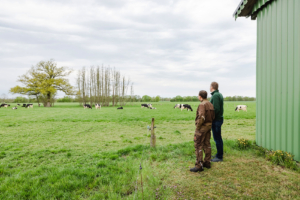
The Uelzena Group says it is continually working on reducing greenhouse gas emissions in production. To reduce emissions along the value-added chain, the Group says it is essential to focus on the upstream processes – specifically milk production. A pilot project was initiated with the aim of decreasing avoidable emissions in this area. It looks at the carbon footprint of diary farming and milk production and demonstrates options for dairy farmers to reduce their own emissions.
Focus on togetherness
The Covid-19 pandemic turned the working and business world upside down, the company notes, pointing out that lockdown measures and their economic impact also affected employees of the Uelzena Group in a variety of ways. Positive effects included a stronger team spirit and the expansion of digital possibilities, while negative effects were caused by the many necessary process adjustments. Ensuring the health and safety of the employees whilst also sustaining the business processes as a milk-processing company was a major challenge that Uelzena was able to handle successfully.
Sustainable milk production
Incorporating sustainability aspects with regard to the primary ingredient of milk holds an especially high priority for Uelzena as a milk-processing company. In 2020, the volume of raw milk supplied rose by further seven percent. 76 percent of this milk is VLOG certified, which means that no genetically modified crops are used in the cattle feed.
In order to investigate aspects of sustainability at the level of milk production, Uelzena participates in the QM sustainability module milk.
We may ask you to place cookies on your device. We use cookies to let us know when you visit our websites, how you interact with us, to enrich your user experience and to customise your relationship with our website.
Click on the different sections for more information. You can also change some of your preferences. Please note that blocking some types of cookies may affect your experience on our websites and the services we can provide.
Essential Website Cookies
These cookies are strictly necessary to provide you with services available through our website and to use some of its features.
Because these cookies are strictly necessary to provide the website, refusing them will affect the functioning of our site. You can always block or delete cookies by changing your browser settings and block all cookies on this website forcibly. But this will always ask you to accept/refuse cookies when you visit our site again.
We fully respect if you want to refuse cookies, but to avoid asking you each time again to kindly allow us to store a cookie for that purpose. You are always free to unsubscribe or other cookies to get a better experience. If you refuse cookies, we will delete all cookies set in our domain.
We provide you with a list of cookies stored on your computer in our domain, so that you can check what we have stored. For security reasons, we cannot display or modify cookies from other domains. You can check these in your browser's security settings.
.
Google Analytics Cookies
These cookies collect information that is used in aggregate form to help us understand how our website is used or how effective our marketing campaigns are, or to help us customise our website and application for you to improve your experience.
If you do not want us to track your visit to our site, you can disable this in your browser here:
.
Other external services
We also use various external services such as Google Webfonts, Google Maps and external video providers. Since these providers may collect personal data such as your IP address, you can block them here. Please note that this may significantly reduce the functionality and appearance of our site. Changes will only be effective once you reload the page
Google Webfont Settings:
Google Maps Settings:
Google reCaptcha settings:
Vimeo and Youtube videos embedding:
.
Privacy Beleid
U kunt meer lezen over onze cookies en privacy-instellingen op onze Privacybeleid-pagina.