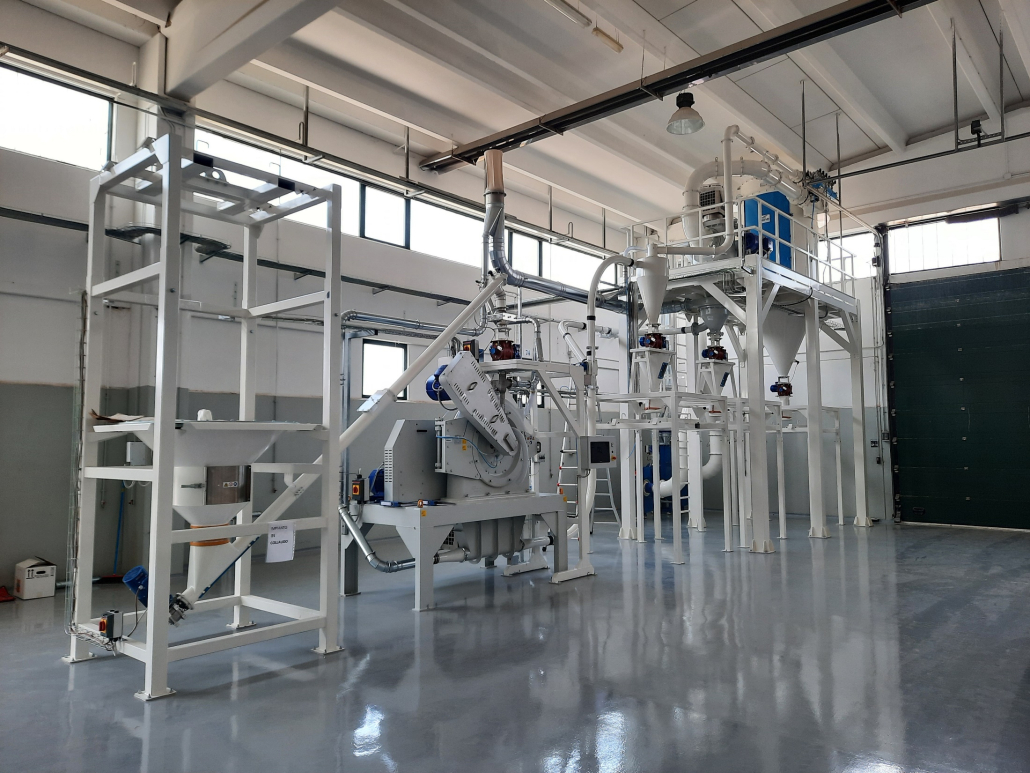
Hosokawa Alpine protein dry fractionation separates protein from starch and goes easy on the water
Hosokawa Alpine, a provider of powder processing technology, offers a range of milling and classification systems designed to increase the protein content of plantbased flours. The company says its protein dry fractionation process enables the cost-effective production of high-quality plant-based protein concentrates as a substitute for animal proteins, supporting the growing global demand for protein.
Matching the mill to the raw material
The operating principle of the milling systems is similar: the dehulled endosperm is ground into its main components, starch and protein, without destroying their structure. The mill is chosen according to the product. The Contraplex CW II wide-chamber mill, with two rotating, self-cleaning pin discs, is particularly suitable for oily and/or fibrous products. The ZPS classifier mill is best suited to materials with a low fibre content where a specific particle size must be achieved. Suitable raw materials for the ZPS include wheat and pulses such as faba beans or peas.
In the subsequent classifying step, the Turboplex ATP classifier separates the ground material into two fractions: a low-protein, coarse fraction and a highly enriched, fine protein meal.
The High Efficiency Process
Hosokawa Alpine’s High Efficiency Process combines multi-stage grinding and classifying in a targeted way, which the company says separates protein and starch components particularly effectively. Compared with the conventional process based on the ZPS classifier mill, it enables yield increases of up to 60 per cent, according to the company, along with higher fractionation efficiency and an improved recovery rate of protein and starch components.
“With our High Efficiency Process, we can significantly increase the yield of valuable protein fractions whilst simultaneously enhancing the purity of the starch fraction. In this way, we help our customers to
make even better use of the potential of plant-based raw materials and to produce high-quality end products cost-effectively,” says Nicole Dünzer, Sales Manager Food at Hosokawa Alpine.
Dry rather than wet
The company says dry fractionation requires significantly fewer process steps than conventional wet processes and does not involve the use of large quantities of water. It presents the process as an efficient route to new protein sources and to cost-effective plant-based protein concentrates.
Reference installations
Two customer sites illustrate the equipment. At InnovaProt in Italy, the Contraplex CW II is used in the standard process for fatty and/or fibrous products. At Müller’s Mühle in Germany, the precision process using the ZPS classifier mill is applied where flour must be ground very finely and high protein levels and yields are required.
Together with partners from across the Hosokawa Micron Group, Hosokawa Alpine also offers turnkey solutions that include, in addition to grinding and classifying, drying, mixing and steam sterilisation. Technologies for pneumatic conveying, dosing and weighing, and the storage of proteins, complete the range.
For more information, visit: www.hosokawa-alpine.com
Digital issue: Please click here for more information