Hybrid meat puts formulation science at the centre of the protein transition
A white paper from ingredient distributor ACI Group argues that partly replacing animal protein with plant-based ingredients can lower the environmental footprint of meat products without asking consumers to change habits. For food scientists, the case rests on sensory parity, ingredient functionality and scalable supply, with an 85% blind-testing threshold proposed as a market-entry gate for new hybrid products.
The white paper Hybrid Meat & the Future of Sustainable Protein, from ACI Group, describes hybrid meat as “a pragmatic bridge between current consumption patterns and a more sustainable protein future”. The paper defines the category as products in which a defined portion of conventional meat is intentionally replaced with pulses, grains, legumes or mycelium.
Implications for formulators
The practical burden falls on the food science and manufacturing sectors. ACI Group says that “the formulation challenge goes well beyond simply adding plant protein to a meat product”. Texture and mouthfeel, flavour, moisture retention, cooking performance and nutritional profile must be balanced against cost targets and a credible sustainability claim.
The white paper names three obstacles: industrial-scale production of consistent hybrid products, which requires supply chain alignment and high-performance ingredients; sensory equivalence in complex formats; and regulatory clarity, since definitions, labelling and claims guidance are still developing.
Dr Briony Sayers, Food & Nutritional Scientist at ACI Group, said: “For hybrid meat to move beyond individual launches and become a meaningful category, manufacturers need to get the formulation right.”
The case for partial replacement
The paper argues that all-or-nothing dietary shifts have low long-term adherence. It cites a 2014 Humane Research Council survey of 11 399 US adults, which found that five out of six who adopted vegan or vegetarian diets returned to eating meat. Mintel data show that, of the up to 90% of UK consumers who regularly eat red meat or poultry, 34% report regular meat-free days, rising to 38% among those aged 25 to 34.
On environmental grounds, the paper notes that modern agriculture uses approximately 50% of the world’s habitable land, contributes roughly 30% of global greenhouse gas emissions and accounts for nearly 70% of freshwater withdrawals.
Life-cycle assessment studies, it says, show plant-based meat alternatives with up to 89% lower environmental impact across indicators including global warming potential, land use and water consumption, with land use reductions of up to 79% and water savings approaching 95%. These figures describe fully plant-based alternatives; the paper notes that hybrid formulations “can extend these benefits without requiring full substitution”, and that replacing approximately 30% of meat content with plant protein can reduce emissions and land use “while preserving nutritional integrity and sensory quality”.
Nutritionally, hybrids are said to retain protein levels comparable to conventional meat while lowering saturated fat and cholesterol and adding fibre “rarely present in animal-only formats”.
Sensory parity as a quality gate
The sensory specification is stringent. Products must achieve parity or superiority against a 100% meat equivalent in blind triangle testing. The paper notes: “Do not proceed to market unless blind testing demonstrates ≥85% of target consumers cannot distinguish hybrid from 100% meat or actively prefer the hybrid version.”
The target attributes include a fibrous, cohesive bite without mushiness or rubberiness; no vegetal or beany off-notes; equal or superior moisture retention; natural Maillard browning; and an overall acceptability rating of 85% or above.
Ingredients and processing
The paper distinguishes hybrids from traditional extenders, which were “rarely positioned as a value adding ingredients” and offered limited health or sustainability benefits. It notes: “The objective is not substitution for cost efficiency, but optimisation.”
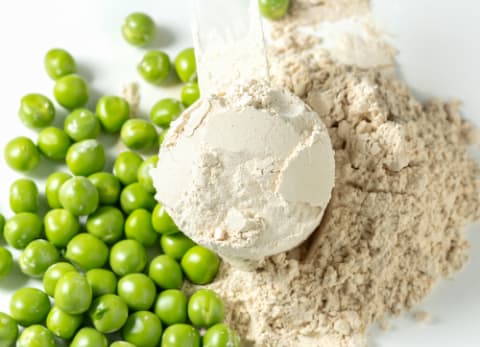
Extrusion, high-moisture extrusion, wet and dry texturisation and shear cell technology are cited as improving fibrous texture and mouthfeel, and as helping to reduce anti-nutritional factors. Ingredients highlighted are those from ACI Group’s own portfolio: isolated pea (83% protein), texturised pea protein flakes (74.6%) and isolated soy (90%); a blend of fava bean, yellow pea, sunflower and wheat; and, through a distribution agreement with IFF, the SUPRO® and RESPONSE® series for water binding, emulsification and textural stability.
Dr Sayers said: “It is not simply a question of finding the lowest-cost source of protein. Manufacturers need ingredients that deliver consistent quality and functionality at scale, while supporting the nutritional, sensory, cost and sustainability requirements of the finished product.”
Market and retail signals
The paper cites projections of growth from roughly US$540.6 million in 2025 to US$1.31 billion by 2035, a CAGR of 9.5%. Burgers and patties account for over a quarter of hybrid formats, although mince formats are said to show the highest versatility and adoption potential. North America and Europe lead adoption, with Asia-Pacific expected to grow fastest in relative terms.
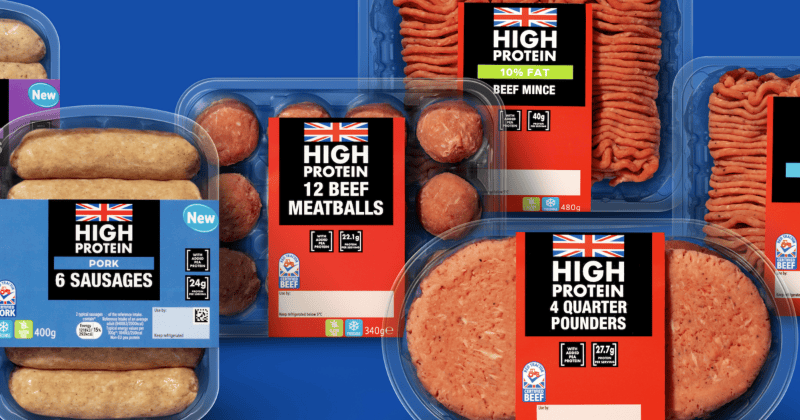
Lidl’s range, launched nationwide in the United Kingdom on 18 September, combines British meat with pea protein in sausages, mince, burgers and meatballs, with at least 20% more protein than conventional equivalents.
The paper adds a caution on credibility: some cultivated meat retail products contain low percentages of cultured protein, such as 3% in certain Singapore launches, and hybrids “must deliver measurable and material reductions in animal protein content”.
The UK Climate Change Committee recommends a 20% reduction in red meat and dairy consumption by 2030 to meet net-zero targets, and contract caterer Levy reported a 71.5% reduction in beef burger-related emissions since 2019, achieved through beef reduction and the introduction of hybrid alternatives.
- The white paper “Hybrid Meat & the Future of Sustainable Protein” is available at: https://acigroup.biz/market-insights/hybrid-meat-whitepaper